
Provincial Building Code Variation in Canada: Ontario, Quebec, BC and Beyond | ASDV Consultant
Canada has no single enforceable building code. ASDV explains how the National Building Code, provincial variants, and local amendments shape ELV design.
Smart City and Infrastructure Design for Duqm Special Economic Zone | ASDV Consultant
ICT and smart infrastructure design considerations for Oman's Duqm Special Economic Zone, covering SEZAD's GIS platform and the Omantel smart city partnership.
Smart City Infrastructure Design for Saudi Vision 2030 Giga-Projects | ASDV Consultant
How smart city infrastructure design is approached across Saudi Arabia's Vision 2030 giga-projects, from integrated command platforms to sensor networks.
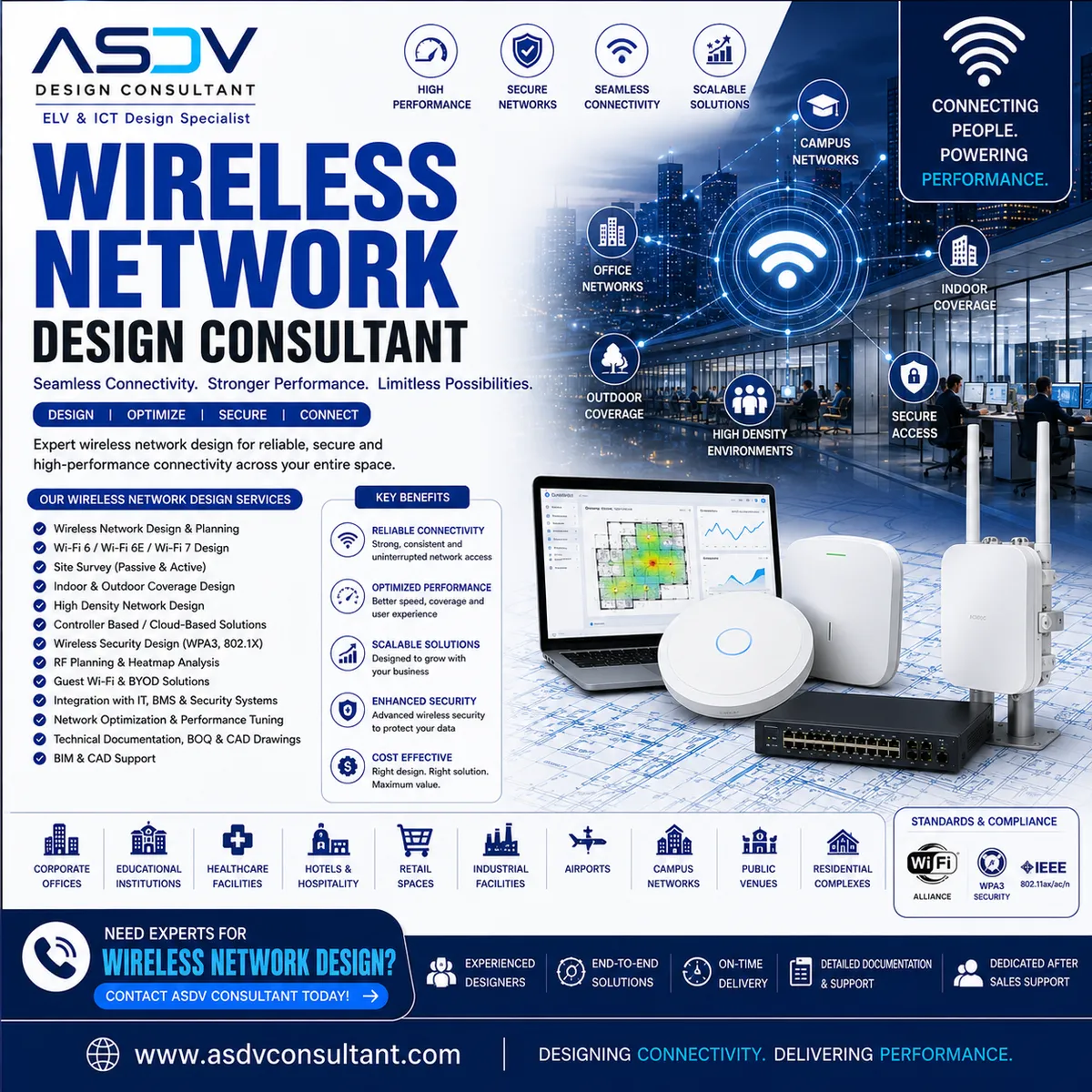
6G Wireless Technology: Future Outlook 2029-2038
6G, targeted for 2030 standardisation, will deliver terabit-per-second speeds, sub-100-microsecond latency, and native AI integration into the air interface itself, enabling joint sensing and communication.
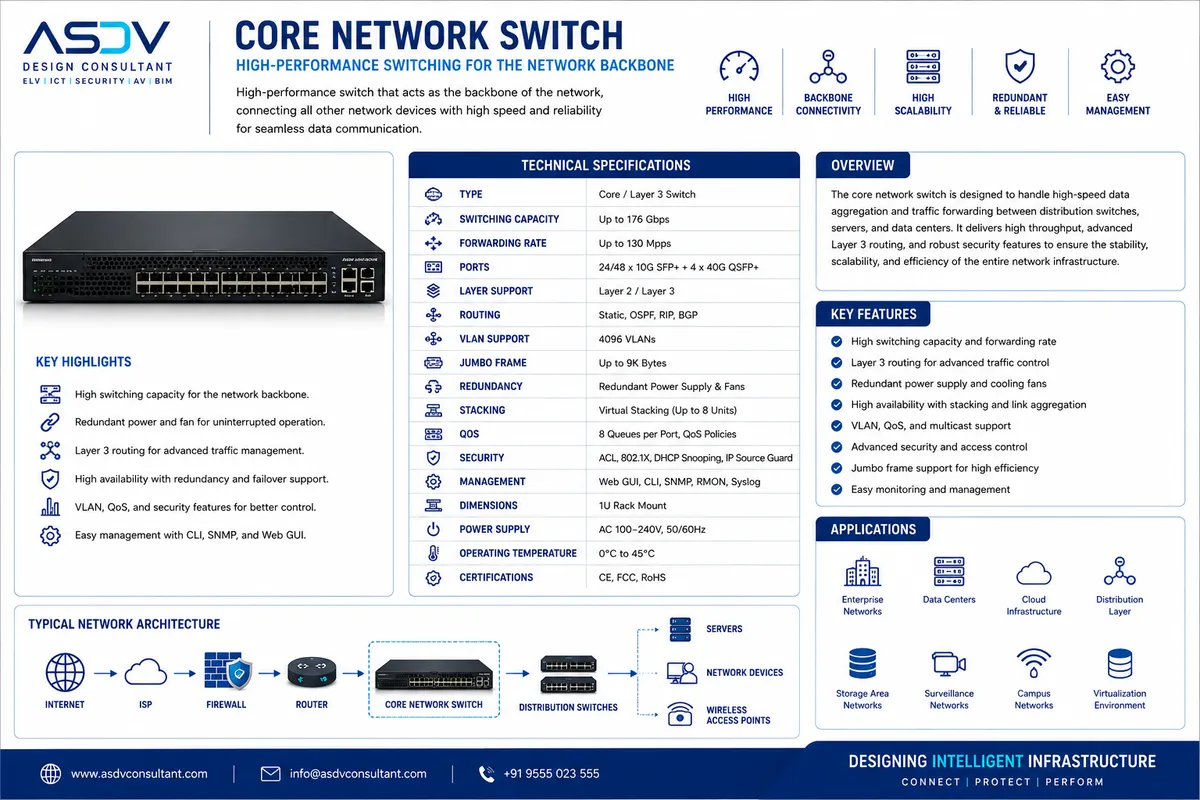
AI Autonomous Networking: Future Outlook 2029-2038
Self-managing networks will configure, optimise, and heal themselves without human intervention — detecting security threats, rerouting around hardware failures, and adapting to new device types.
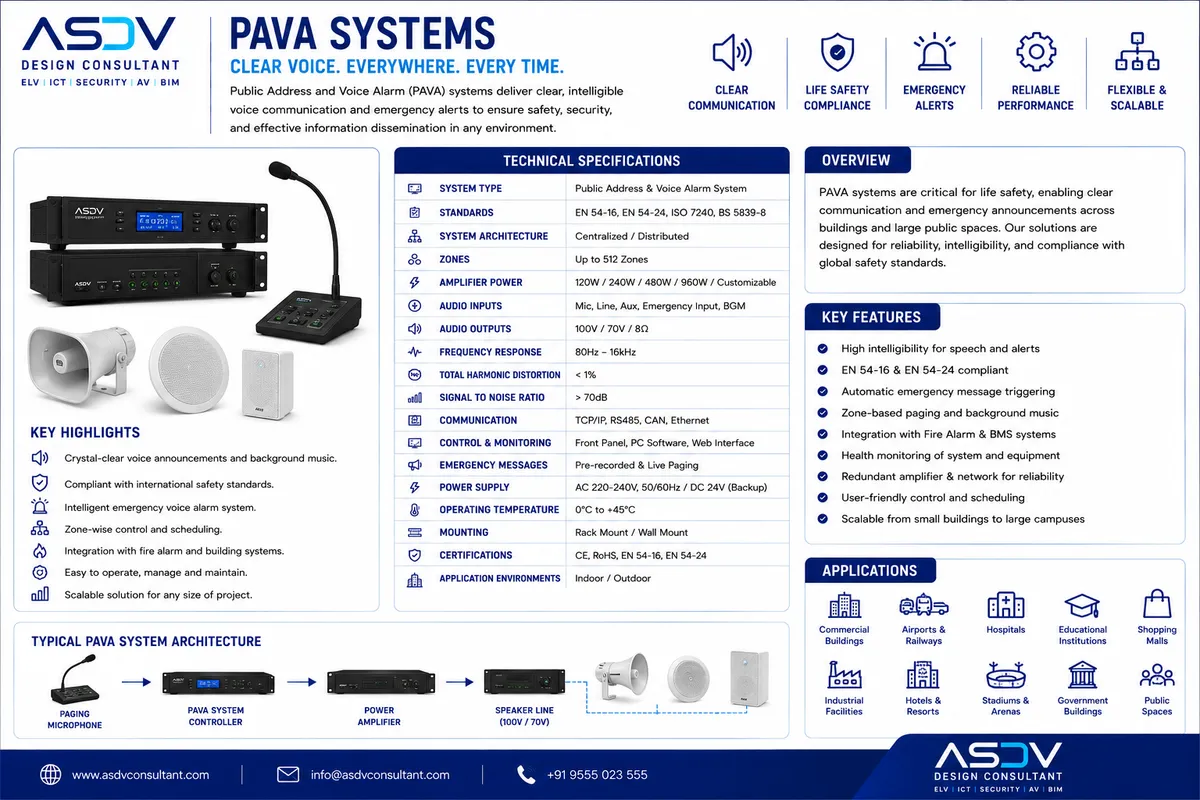
AI-Generated Emergency Instructions: Future Outlook 2028-2034
Generative AI will compose real-time evacuation instructions tailored to the specific incident location, affected zones, and available exit routes — replacing static pre-recorded messages.
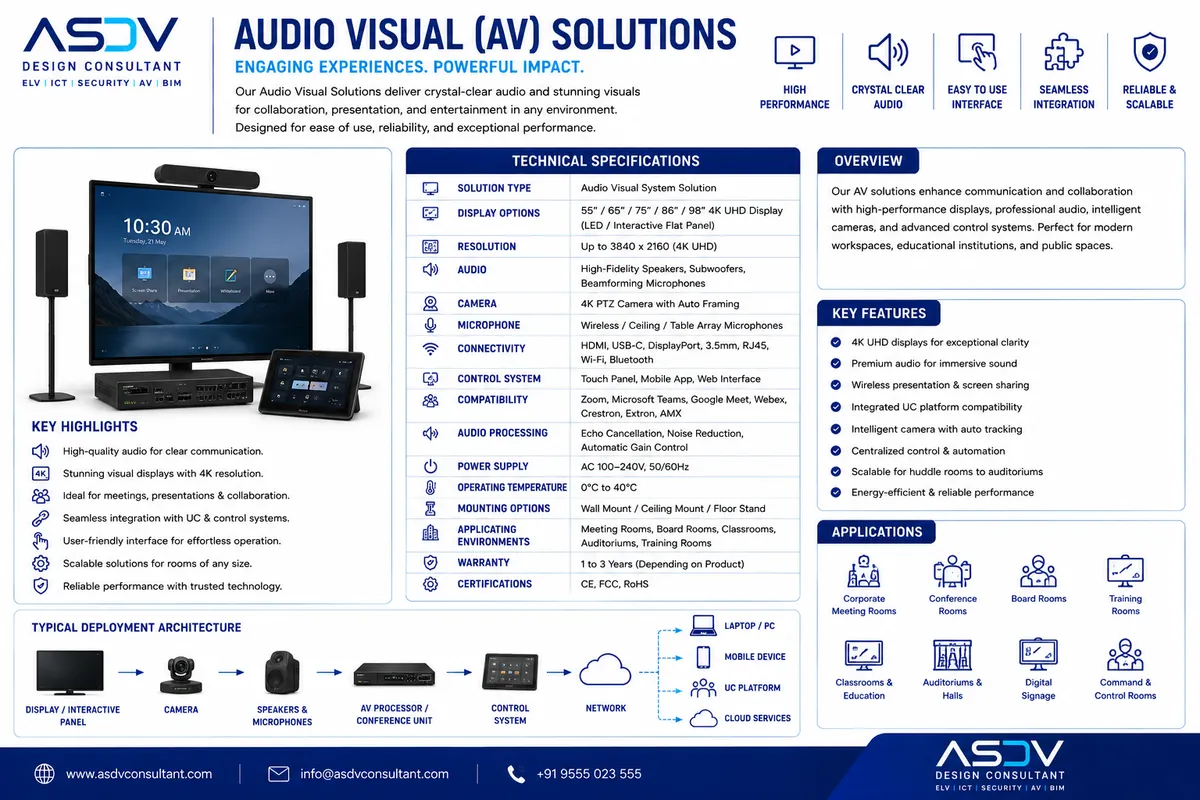
AI-Generated Meeting Environments: Future Outlook 2028-2037
AI will generate photorealistic shared meeting environments dynamically — adapting aesthetics, acoustics, and spatial layout to the meeting's purpose and the optimal cognitive conditions for the task.
AR/VR Immersive Communication: Future Outlook 2028-2037
Lightweight AR glasses will overlay meeting participants, shared documents, and real-time translation annotations into the wearer's physical environment — making the physical meeting room irrelevant.
Cloud-Managed Networking: Meraki, Aruba Central, Mist
Meraki, Aruba Central, and Juniper Mist deliver full network management, firmware updates, and AI analytics from the cloud — enabling zero-touch provisioning of hundreds of access points.
Li-Fi Mainstream Adoption: Future Outlook 2029-2038
IEEE 802.11bb-compliant Li-Fi will integrate into office LED luminaires by 2029, delivering gigabit connectivity through light to hospitals, avionics facilities, and secure government spaces.
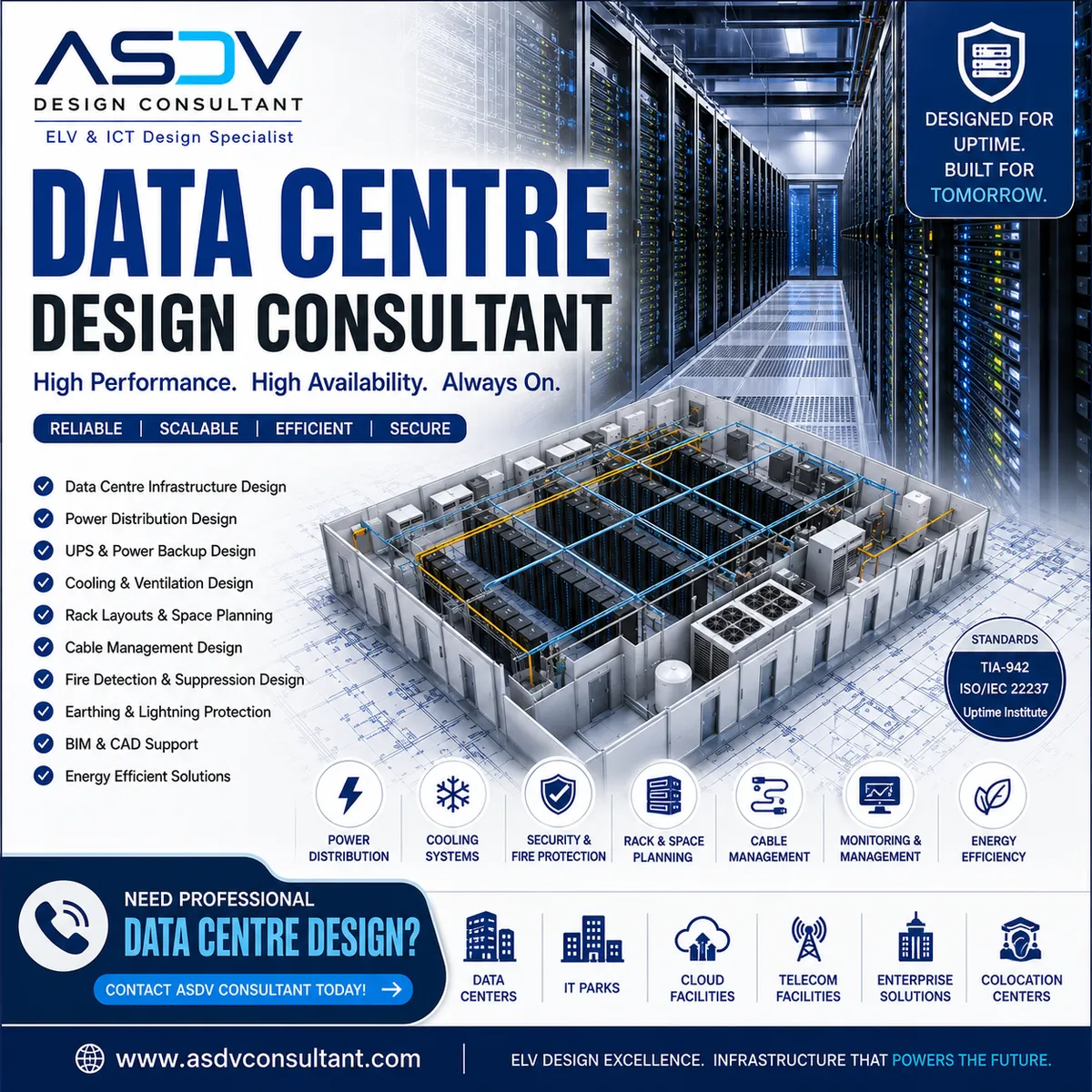
Photonic Computing & DNA Storage: Future Outlook
Photonic chips eliminate the electronic bottleneck in AI inference; DNA-based storage encodes an exabyte of data in a single gram of synthetic DNA — technologies defining data centers of 2035 and beyond.
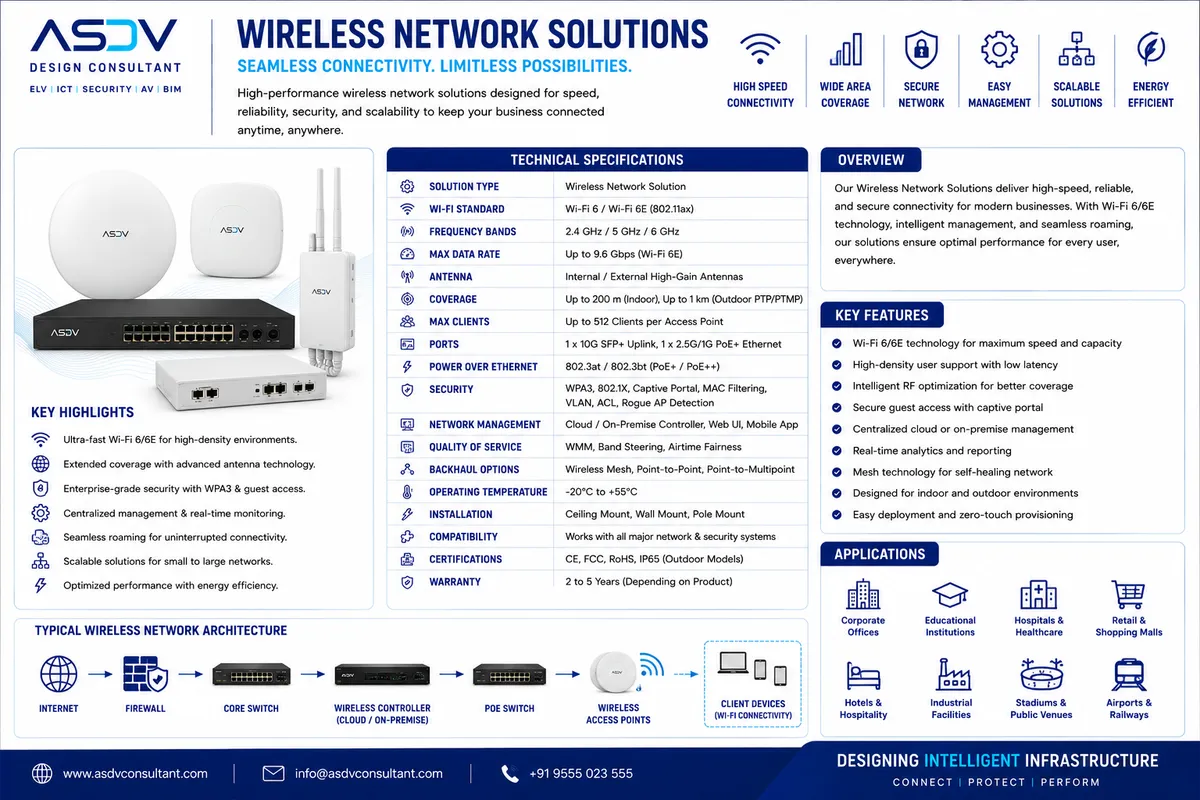
Private 5G Network Design: Industrial IoT & Robotics
Campus-wide private 5G delivers sub-millisecond latency, guaranteed QoS, and SIM-based security to industrial robots, autonomous vehicles, and mission-critical IoT without competing with public cellular.
SD-WAN Integration Design: Multi-Path Network Routing
Software-defined WAN intelligently routes traffic across multiple connections — MPLS, broadband, and 5G — based on application priority, choosing the optimal path for every packet automatically.
Smart Crowd-Guidance Systems: Future Outlook 2028-2034
AI crowd flow modelling will dynamically balance evacuation loads across available exits in real time, reducing total evacuation time by 30-45% compared to static zone-based protocols.
Spatial Computing Collaboration: Apple Vision Pro Future Outlook
Apple Vision Pro and its successors will let distributed teams inhabit shared virtual spaces — reviewing full-scale 3D BIM models and making design decisions together across continents.
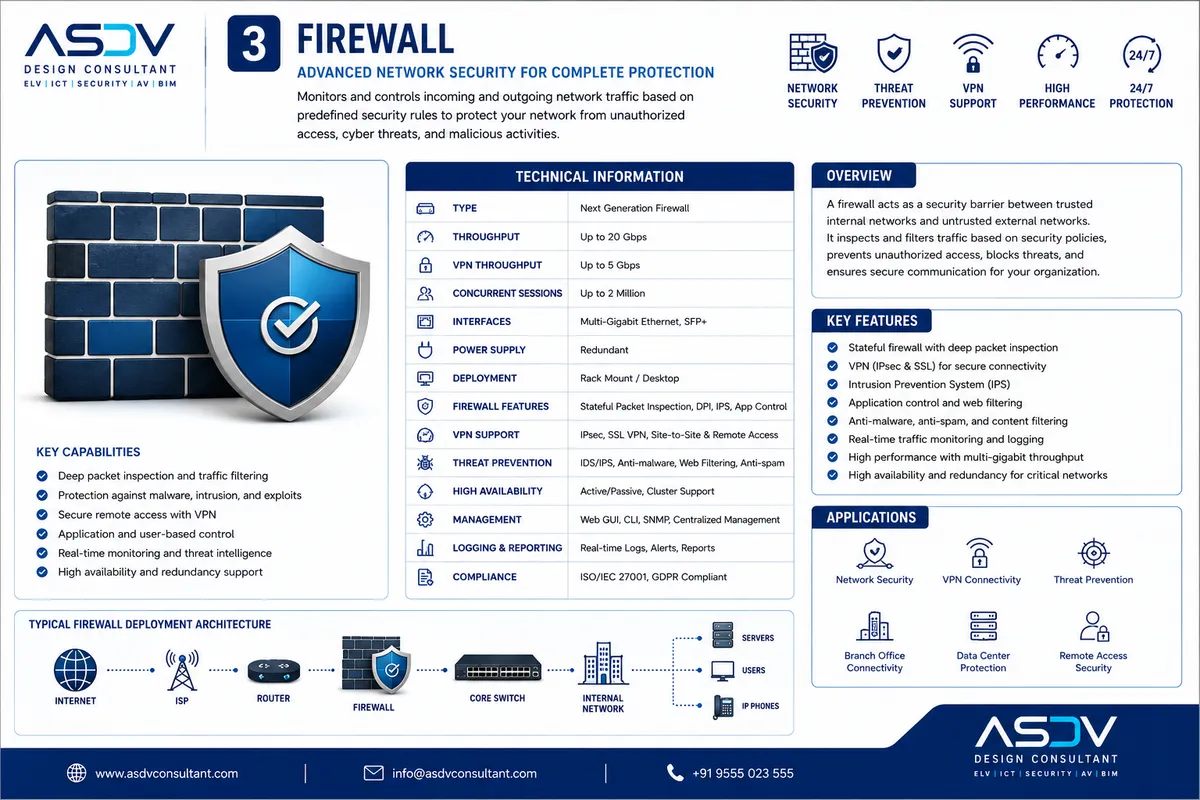
Zero-Trust Data Center Cybersecurity Architecture
Microsegmentation, identity-based access for every workload, encrypted east-west traffic, and continuous behavioral monitoring treat every internal request as untrusted, making lateral movement impossible.
Zero-Trust Network Access (ZTNA) Design
ZTNA replaces implicit trust with continuous identity verification — every device, every user, every session must prove legitimacy before accessing any network resource, regardless of physical location.
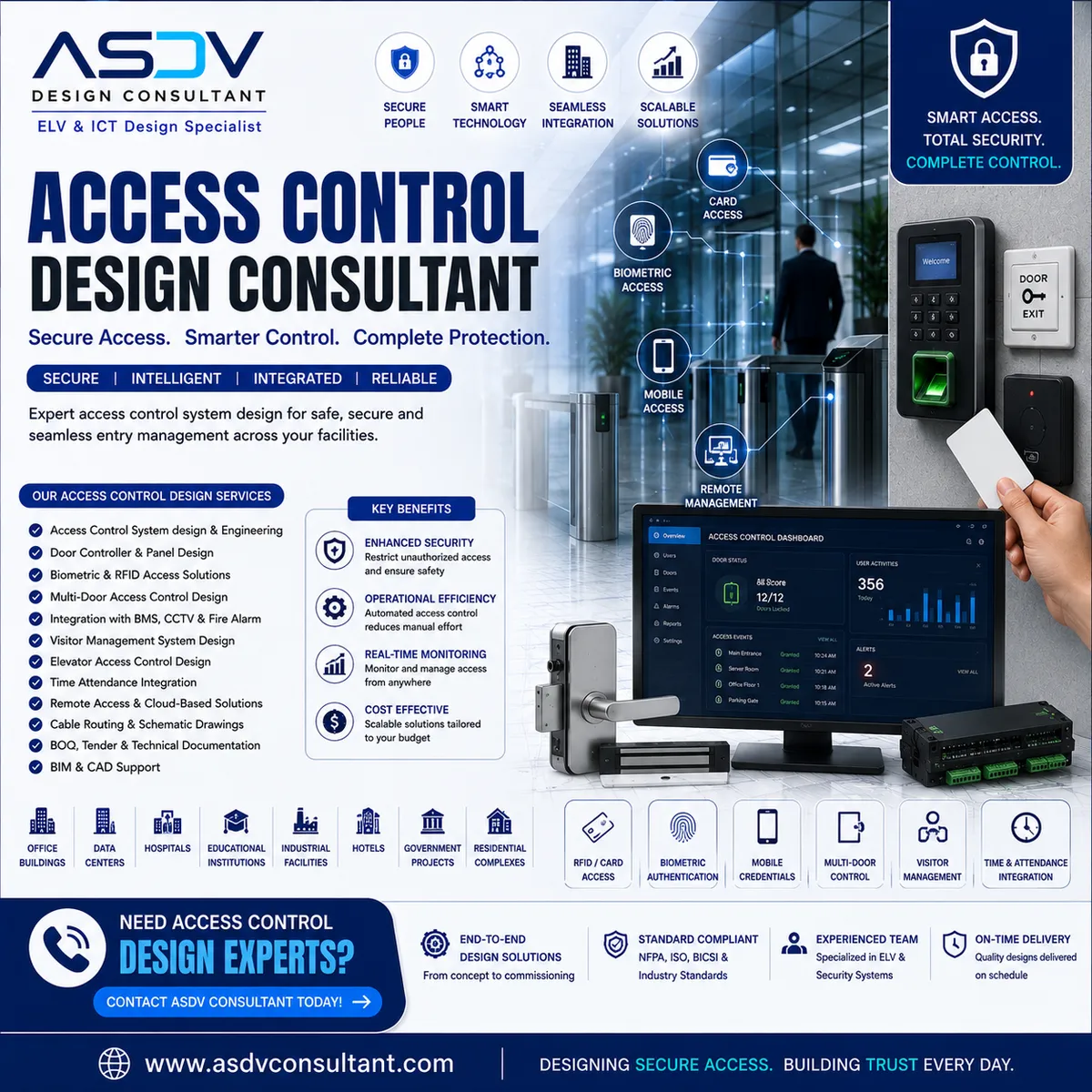
AI Behavioral Access Scoring: Dynamic Risk Scores, Conditional Access & Zero-Binary Physical Security
AI assigns dynamic risk scores to every physical access request — granting conditional access with reduced privileges when behavioural patterns suggest elevated risk, replacing binary allow/deny with intelligent continuous physical security posture management aligned to RBI and SEBI frameworks.
Fully Autonomous Buildings: Level 3 AI Autonomy, 80% Decision Automation by 2032 | ASDV Future Outlook
By 2032, leading commercial buildings will achieve Level 3 autonomy — AI managing 80% of routine decisions without human oversight, with operators reserved exclusively for edge cases and strategic policy exceptions, redefining the facility management role entirely.
Portfolio-Wide AI Sustainability Optimization: Cross-Building Learning Transfer & Instant Inheritance
AI managing 500 buildings simultaneously will transfer learned efficiency optimizations between properties — a new building inheriting decades of operational intelligence from its portfolio siblings the moment it connects to the shared platform, compressing years of tuning into days.
Self-Healing Building Systems: AI Sensor Cross-Validation, Signal Rerouting & Zero-Touch Repair
When a sensor fails, AI will cross-validate against adjacent sensors, impute missing values, reroute control signals through backup paths, and schedule replacement — without paging a facility manager or creating a logged fault condition, eliminating the reactive fault-response model entirely.
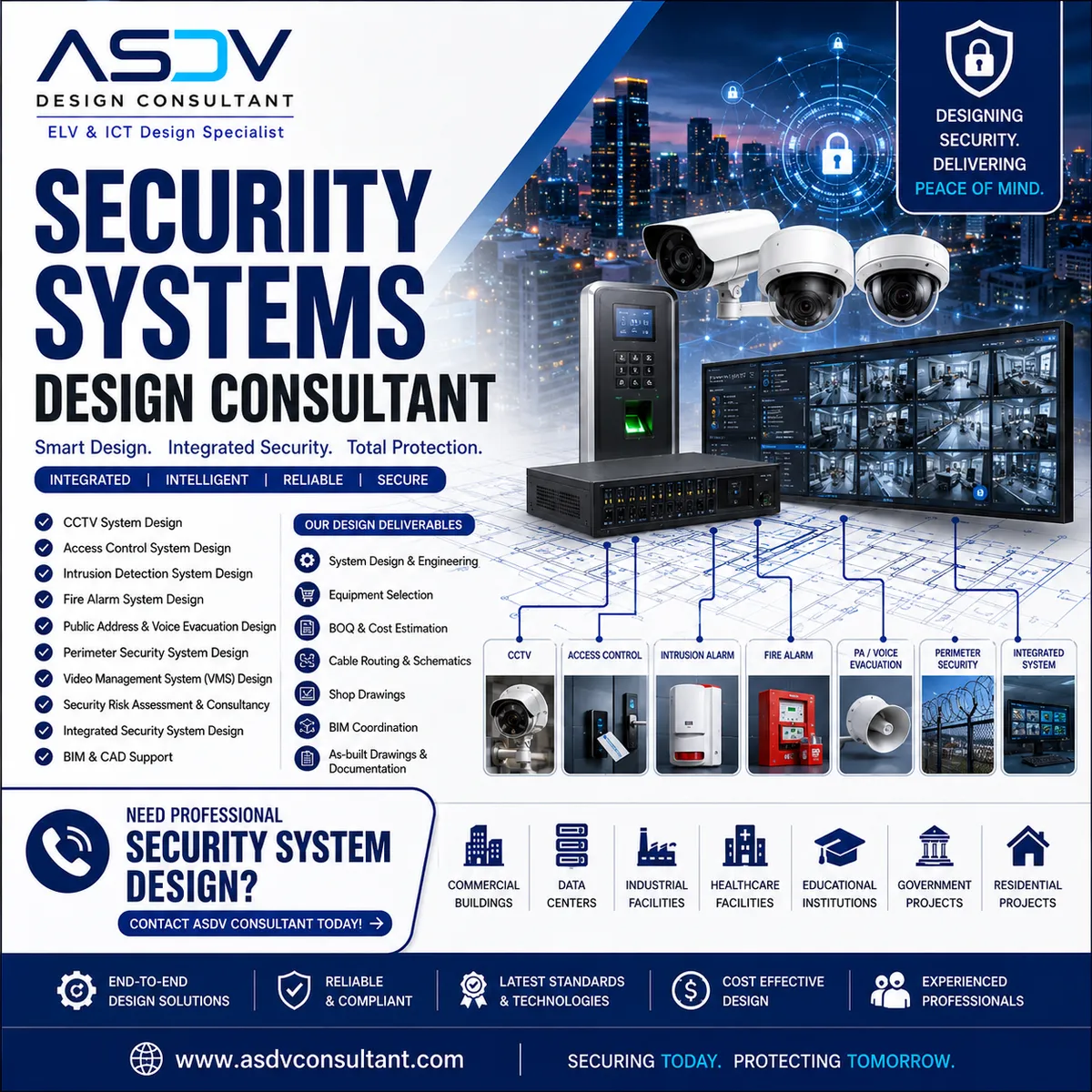
Zero-Trust Physical Security: Continuous Authentication, Least-Privilege Zones & Microsegmentation
Zero-trust applied to physical access — continuous authentication, least-privilege zone access, and microsegmentation of physical areas — reduces insider-threat incidents by 76%, with NIST SP 800-207 alignment and SIEM integration for RBI and SEBI cybersecurity framework compliance.