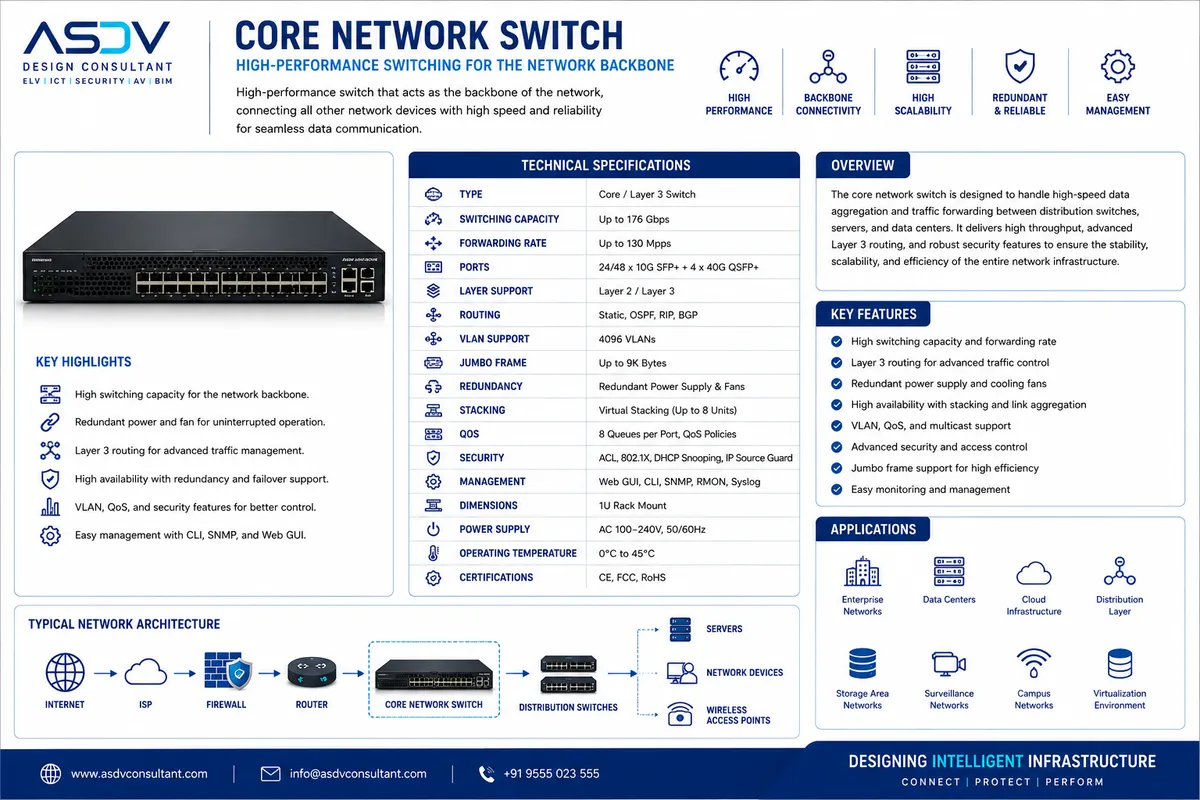
Data Centre
400G / 800G Data Center Networking Design
400G and emerging 800G optical transceivers on spine-leaf architectures handle the massive east-west traffic flows generated by AI training clusters and hyperconverged workloads.

Artificial intelligence now touches nearly every ELV and ICT discipline ASDV designs — from AI video analytics on a single edge CCTV camera to predictive maintenance models that flag a chiller failure weeks before it happens. This tag collects every article where AI is the primary design driver, spanning fire alarm false-alarm elimination, BMS energy optimization, access-control behavioural risk scoring and the future-technologies pieces exploring where AI in the built environment is headed next.
400G and emerging 800G optical transceivers on spine-leaf architectures handle the massive east-west traffic flows generated by AI training clusters and hyperconverged workloads.

6G, targeted for 2030 standardisation, will deliver terabit-per-second speeds, sub-100-microsecond latency, and native AI integration into the air interface itself, enabling joint sensing and communication.
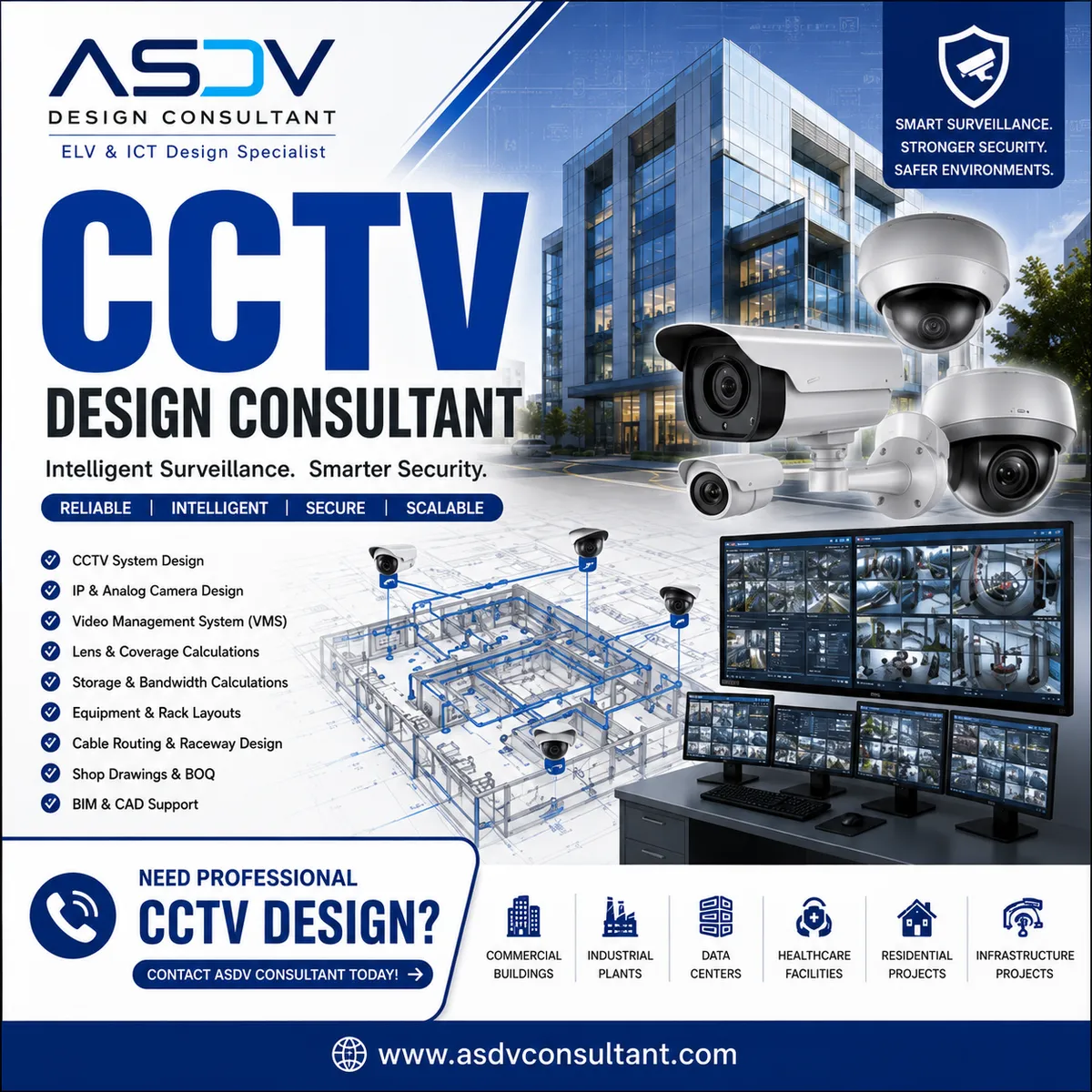
PTZ cameras with AI speaker tracking automatically follow the active speaker, frame group discussions, and switch between presenter and audience views — delivering broadcast-quality video without a camera operator.
Self-managing networks will configure, optimise, and heal themselves without human intervention — detecting security threats, rerouting around hardware failures, and adapting to new device types.
Juniper Mist AI, Cisco DNA, and HPE Aruba AIOps analyse millions of wireless events per second to autonomously optimize channel allocation, transmit power, and client steering without manual IT intervention.
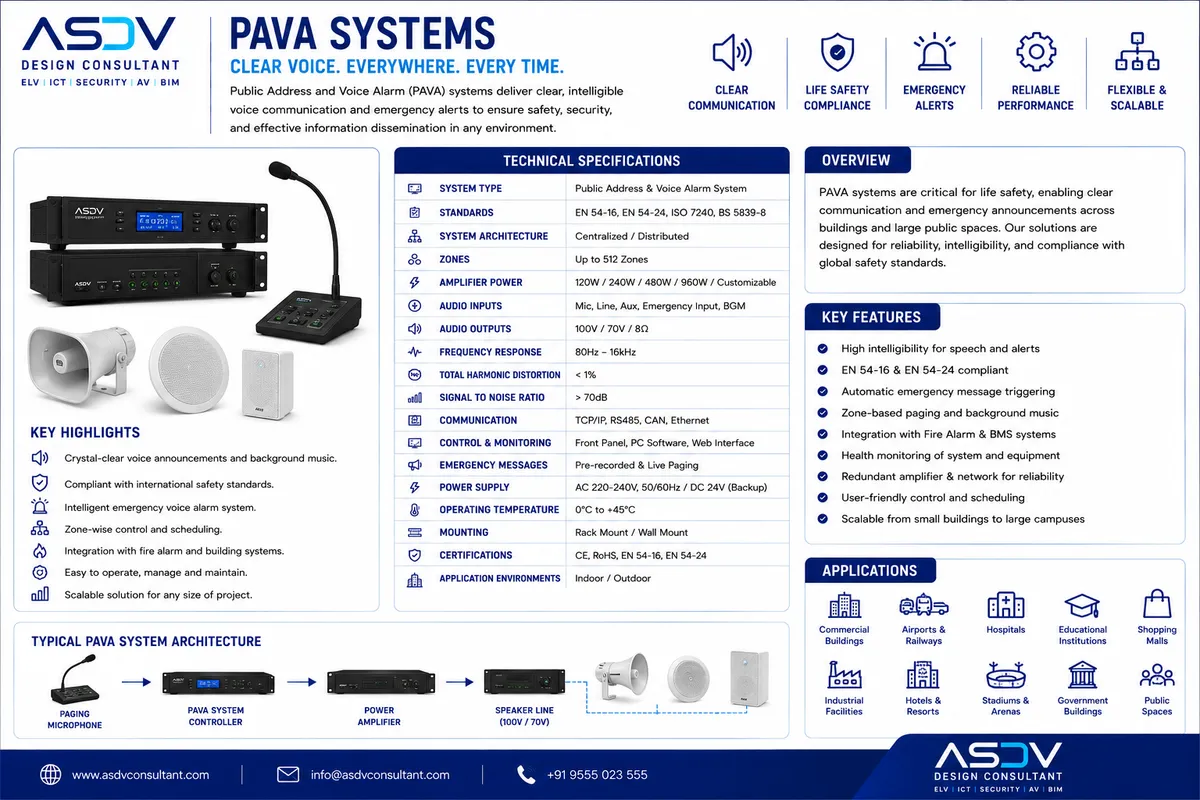
Generative AI will compose real-time evacuation instructions tailored to the specific incident location, affected zones, and available exit routes — replacing static pre-recorded messages.
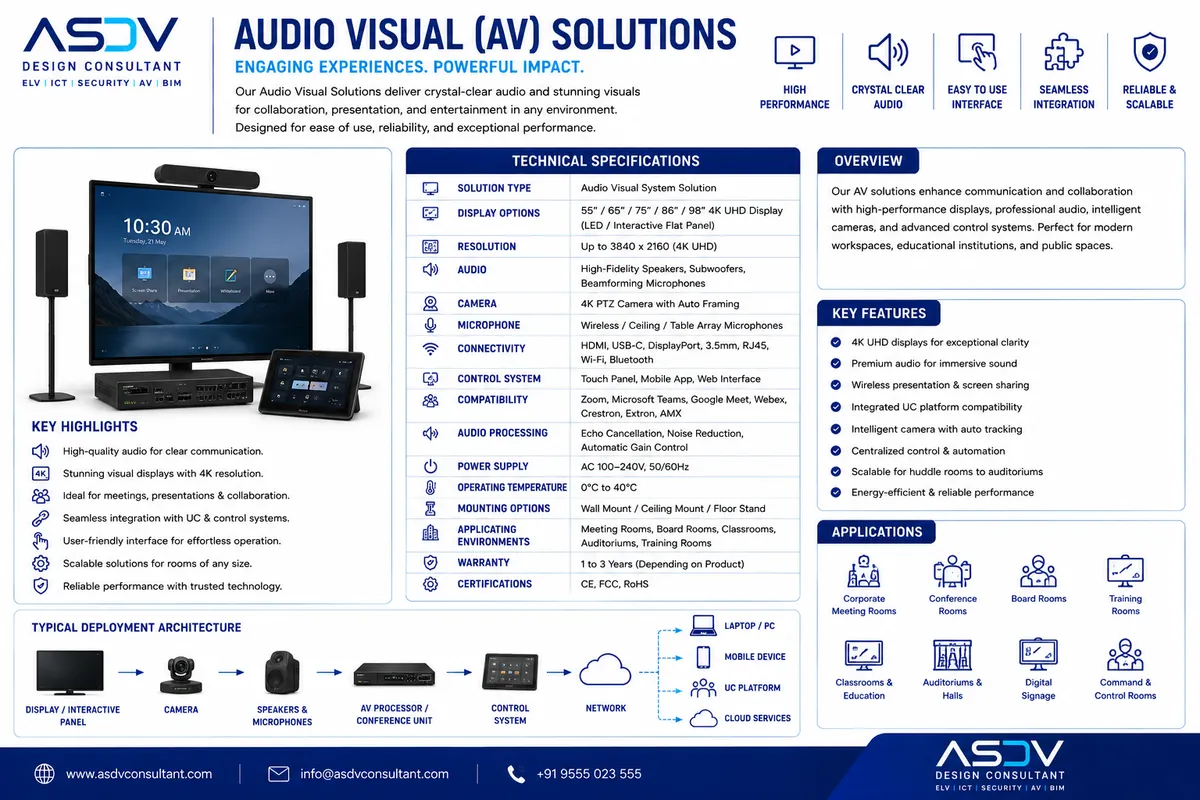
AI will generate photorealistic shared meeting environments dynamically — adapting aesthetics, acoustics, and spatial layout to the meeting's purpose and the optimal cognitive conditions for the task.
Next-generation PAVA systems measure ambient noise continuously and automatically adjust loudspeaker output to maintain speech intelligibility whether a concourse is empty or packed.
Predictive AI analyses historical occupancy patterns, event calendars, and weather data to forecast parking demand, enabling dynamic pricing, pre-emptive management, and optimised staffing.
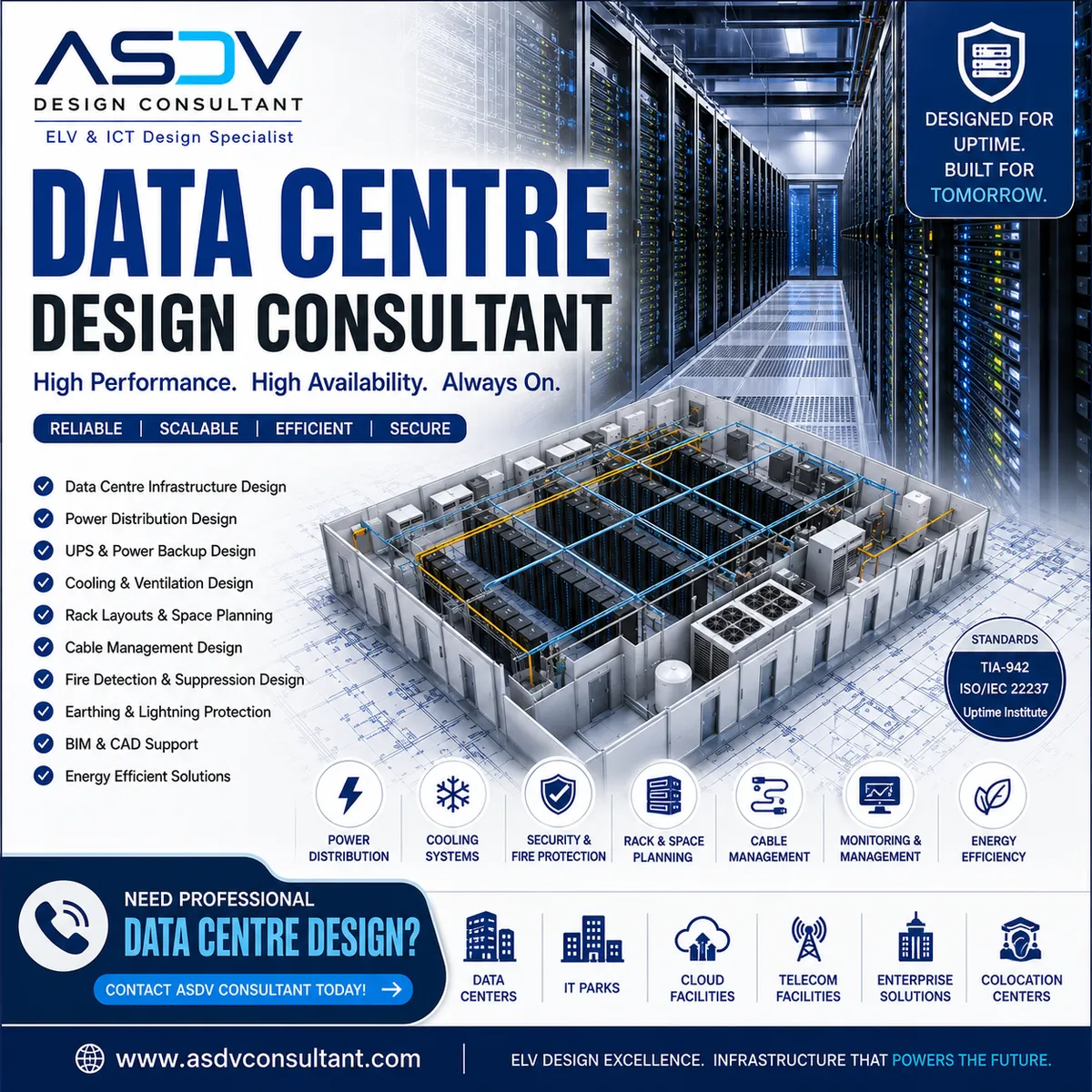
NVIDIA H100/H200 and AMD MI300X GPU clusters generating 700W+ per accelerator demand complete rethinking of power density, structural floor loading, and cooling strategy in data center design.
By 2032, leading hyperscalers will operate dark data centers — facilities running without permanent human presence, managed entirely by AI systems that self-configure, self-heal, and self-optimize.
Meraki, Aruba Central, and Juniper Mist deliver full network management, firmware updates, and AI analytics from the cloud — enabling zero-touch provisioning of hundreds of access points.
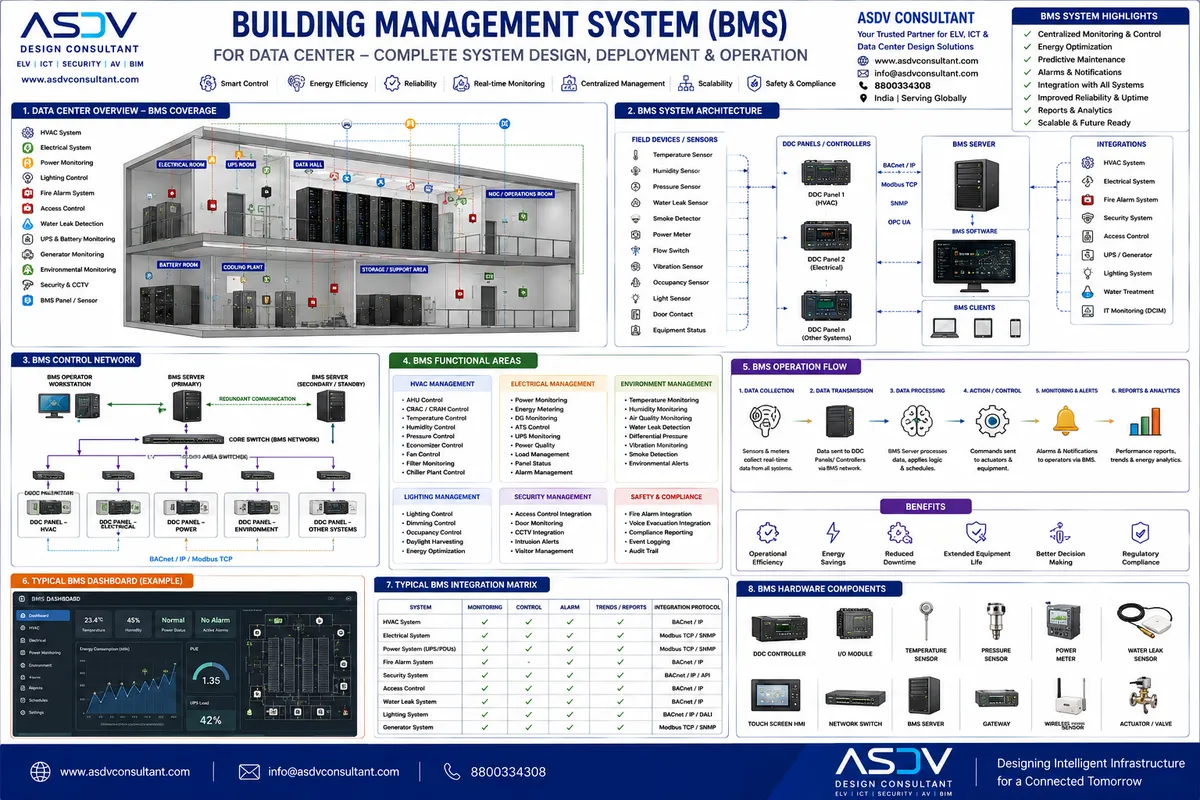
Nlyte, Sunbird, and Vertiv DCIM platforms enhanced with AI detect thermal anomalies, predict power capacity shortfalls, and optimize asset utilization — intelligence spreadsheets can never deliver.
Audience measurement AI measures dwell time, demographic profiles, and engagement metrics for digital signage content — transforming displays into precisely measurable communication channels with ROI.
Real-time supply and demand pricing, already deployed at 40+ global airports, will become standard for commercial parking, optimising operator revenue while distributing demand more evenly.
Direct liquid cooling, rear-door heat exchangers, and single/two-phase immersion cooling achieve PUE below 1.1 — the only physically viable approach for next-generation AI compute densities.
Photonic chips eliminate the electronic bottleneck in AI inference; DNA-based storage encodes an exabyte of data in a single gram of synthetic DNA — technologies defining data centers of 2035 and beyond.
AI crowd flow modelling will dynamically balance evacuation loads across available exits in real time, reducing total evacuation time by 30-45% compared to static zone-based protocols.
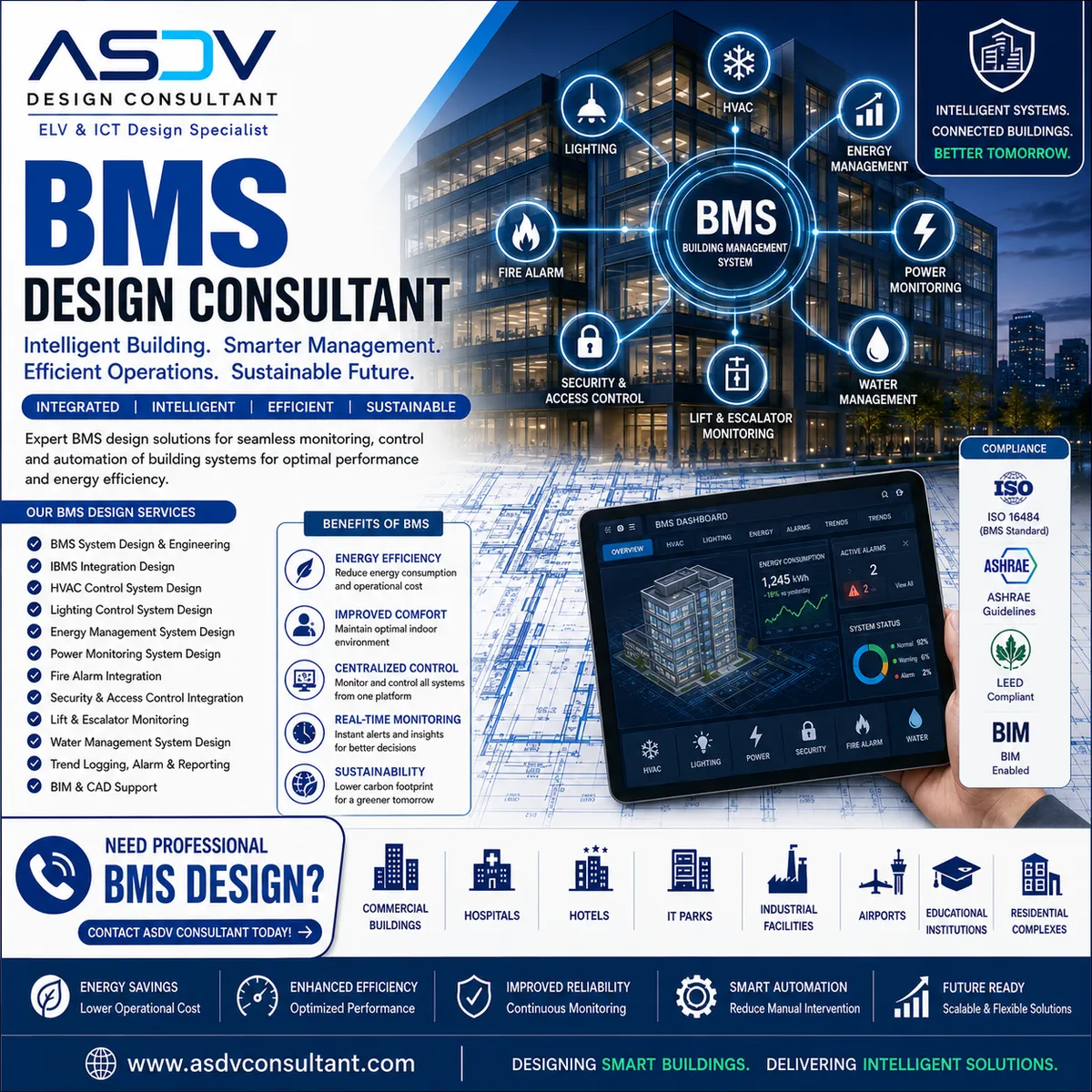
How AI-driven energy optimization, IoT sensor fusion, digital twins, and cloud-native platforms are transforming Building Management Systems — 30-40% energy savings, predictive maintenance, and the roadmap to fully autonomous buildings by 2032.
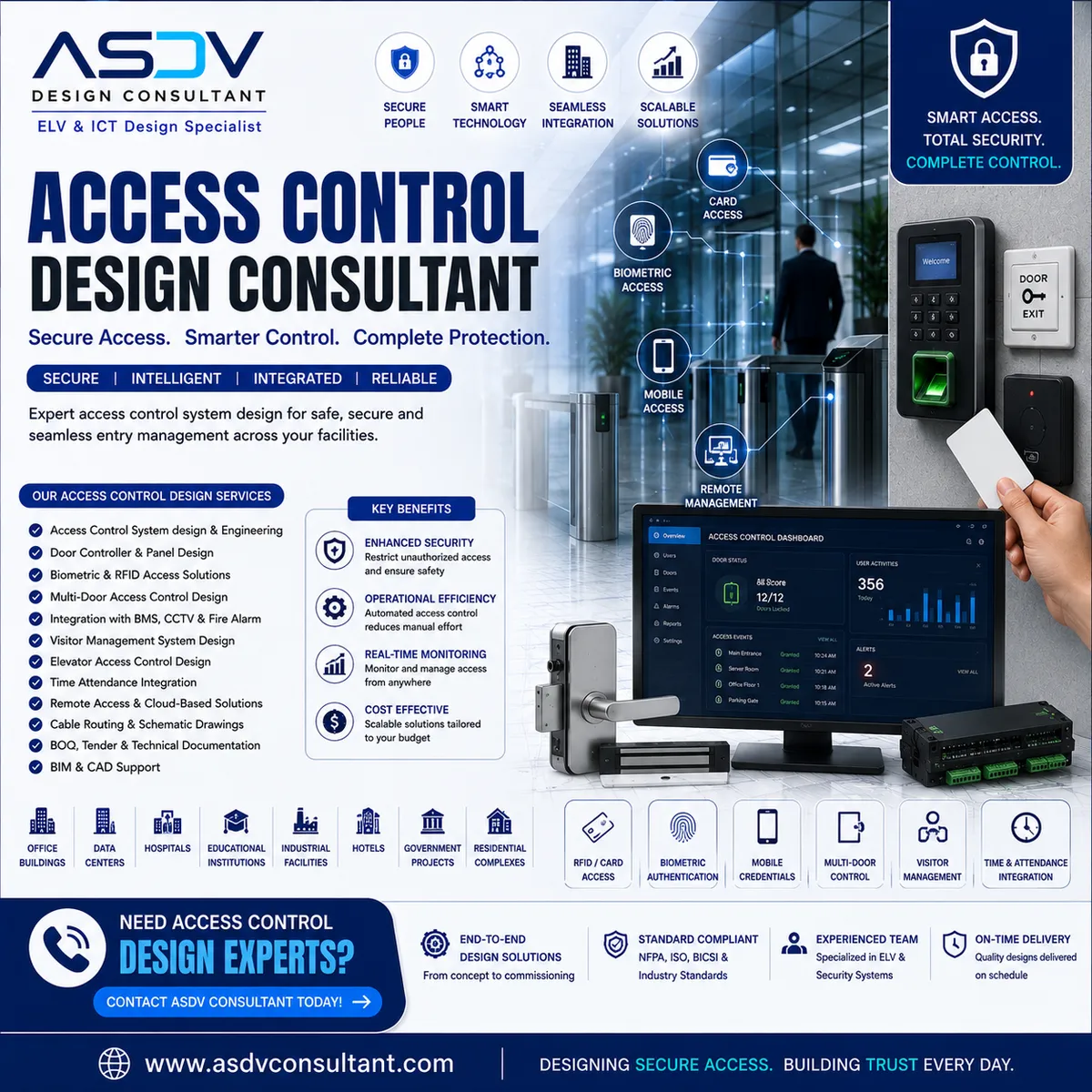
AI assigns dynamic risk scores to every physical access request — granting conditional access with reduced privileges when behavioural patterns suggest elevated risk, replacing binary allow/deny with intelligent continuous physical security posture management aligned to RBI and SEBI frameworks.
AI engines modeled on Google DeepMind's cooling optimizer deliver 30-40% energy savings by continuously adjusting HVAC setpoints, chiller sequencing, and airflow — learning building-specific patterns no human engineer could replicate, validated across Indian commercial building deployments.
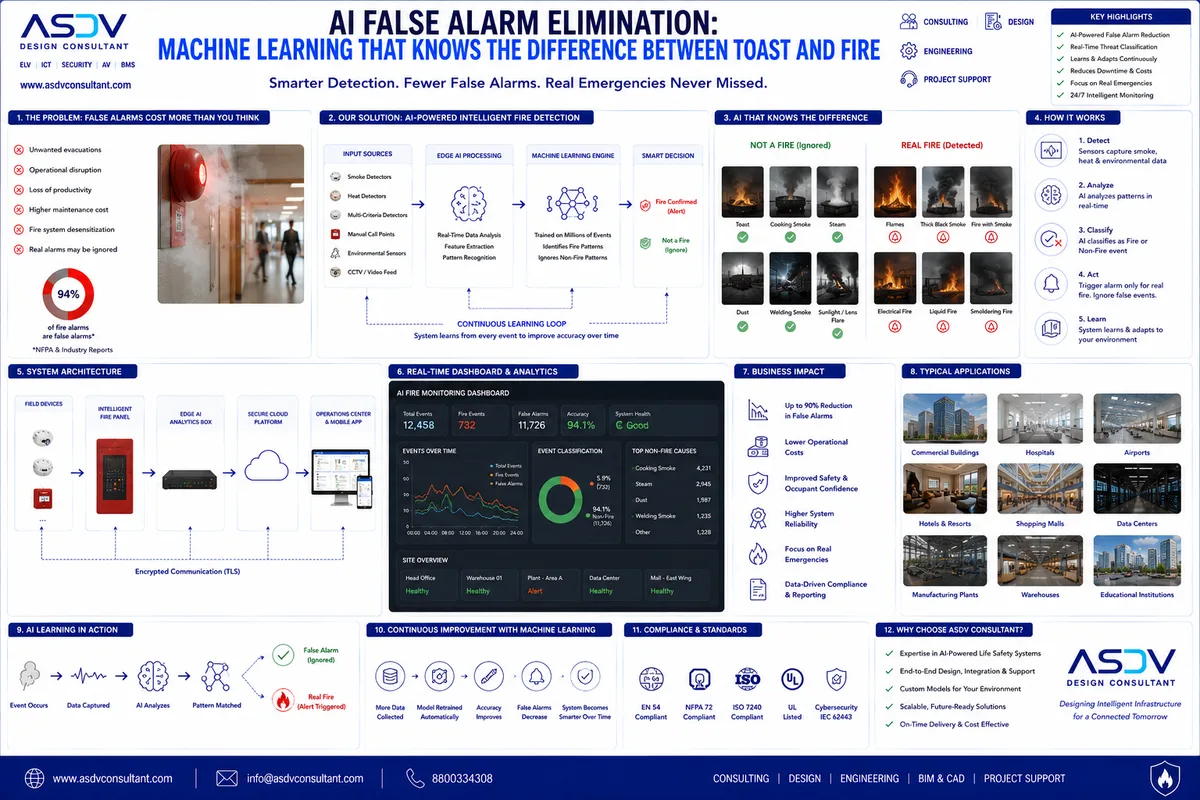
AI false alarm elimination uses machine learning models trained on thousands of real fire and non-fire events to distinguish genuine fire signatures from cooking aerosols, steam, dust, and electrical interference — targeting 99.5%+ specificity without sacrificing detection speed.
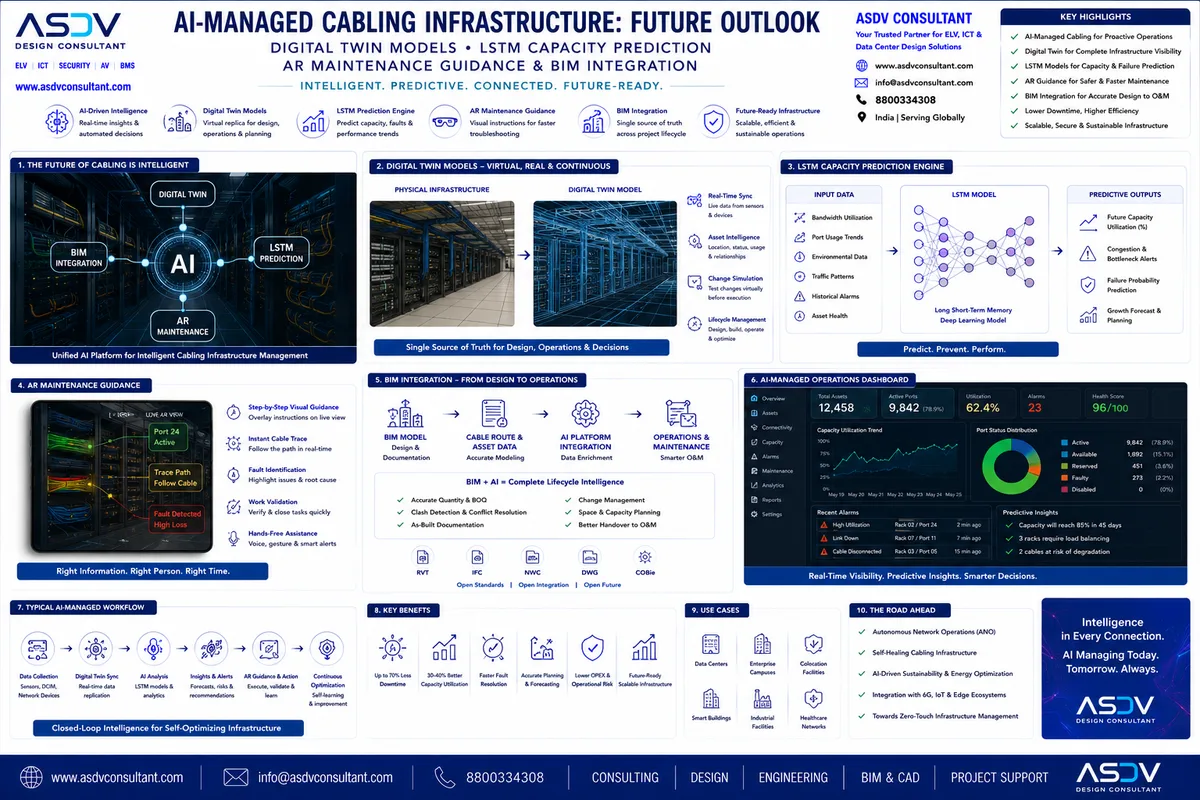
AI-managed cabling infrastructure uses digital twin models, LSTM neural network capacity prediction, AR maintenance guidance (Scope AR, PTC Vuforia), and BIM integration to reduce network outages by 87% and eliminate manual physical layer management — the future of intelligent structured cabling.
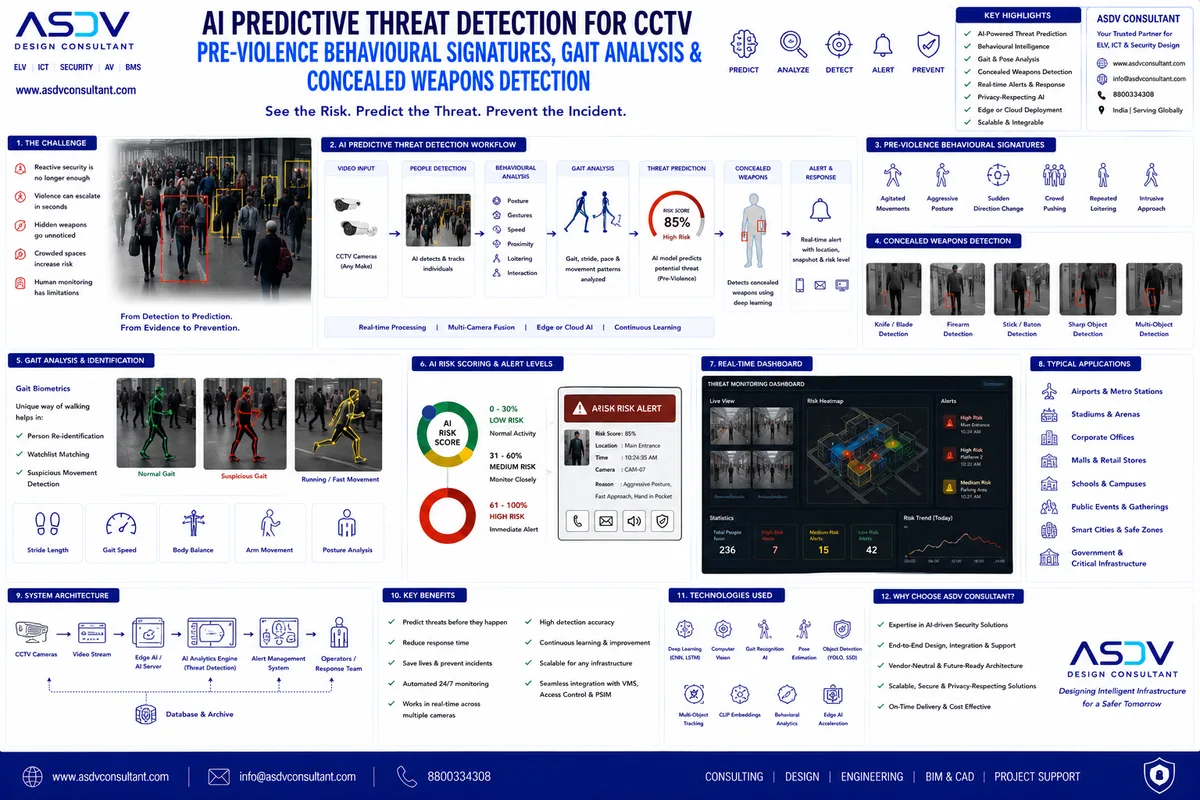
AI predictive threat detection in CCTV identifies pre-violence behavioural signatures, concealed weapons from gait analysis, and aggression precursors from posture and movement — alerting security teams before an incident occurs rather than recording it for post-event review.
Computer vision AI detects multiple individuals passing on a single credential event at controlled entry points in real time — reducing unauthorised entry by 94% versus anti-passback alone, with instant barrier lock and Genetec/Lenel REST API integration and sub-500ms detection latency.
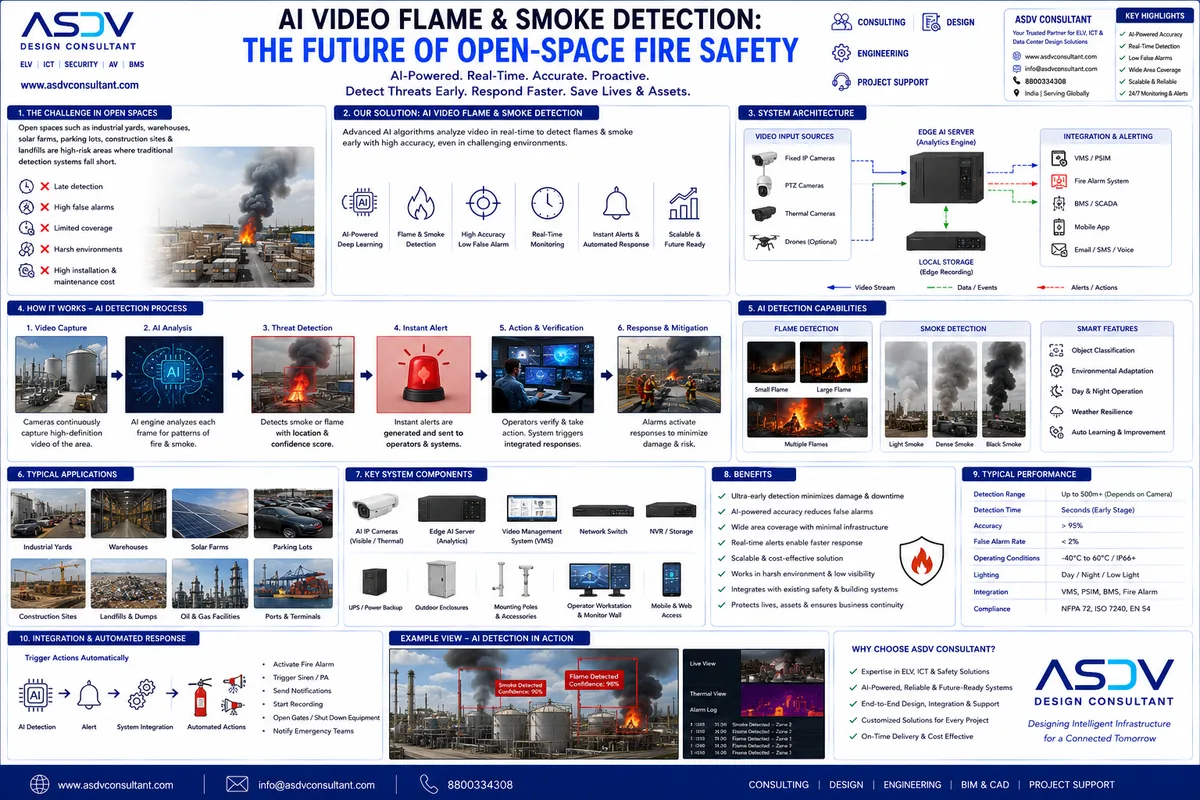
AI video flame & smoke detection uses computer vision to detect fire within seconds across warehouses, atriums & hangars — where conventional point detectors are physically impractical.
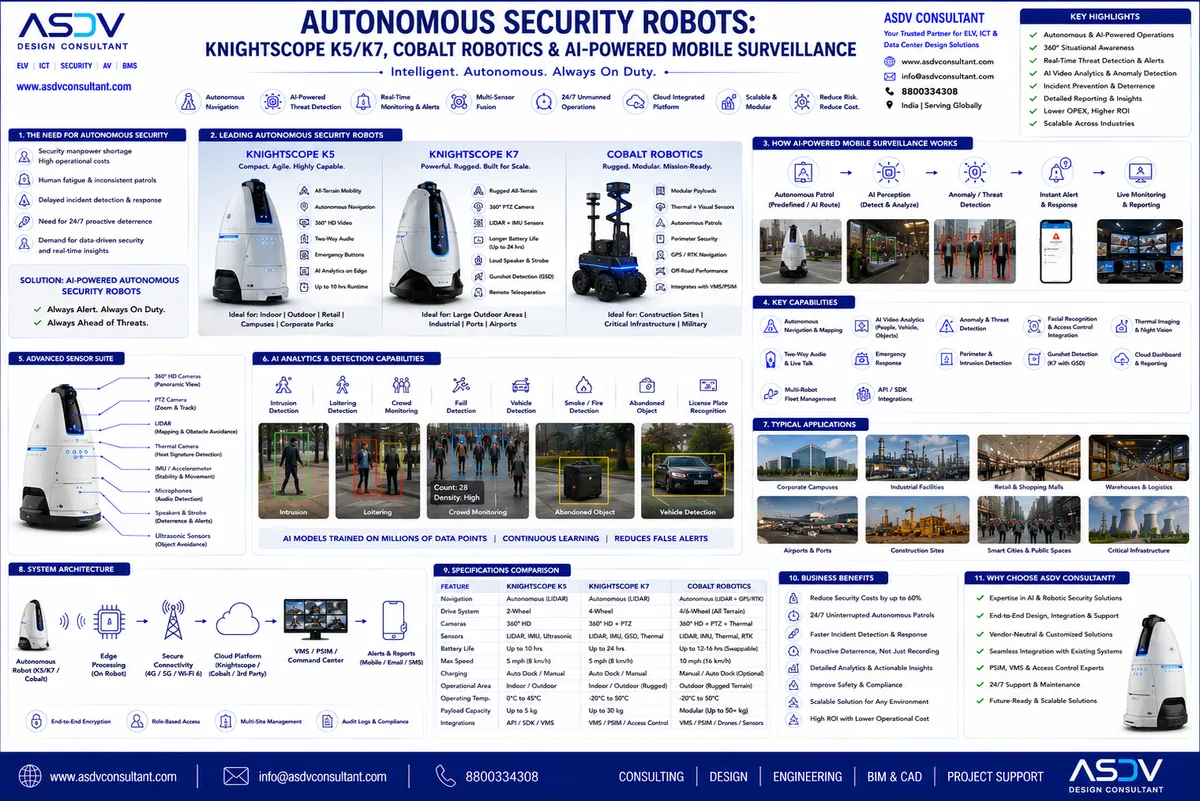
Autonomous security robots like Knightscope K5/K7 and Cobalt Robotics patrol facilities 24/7 on programmed routes — with 360° HD cameras, thermal sensors, ANPR, two-way audio, and AI anomaly detection, generating incident reports in under 90 seconds and integrating with existing VMS platforms.
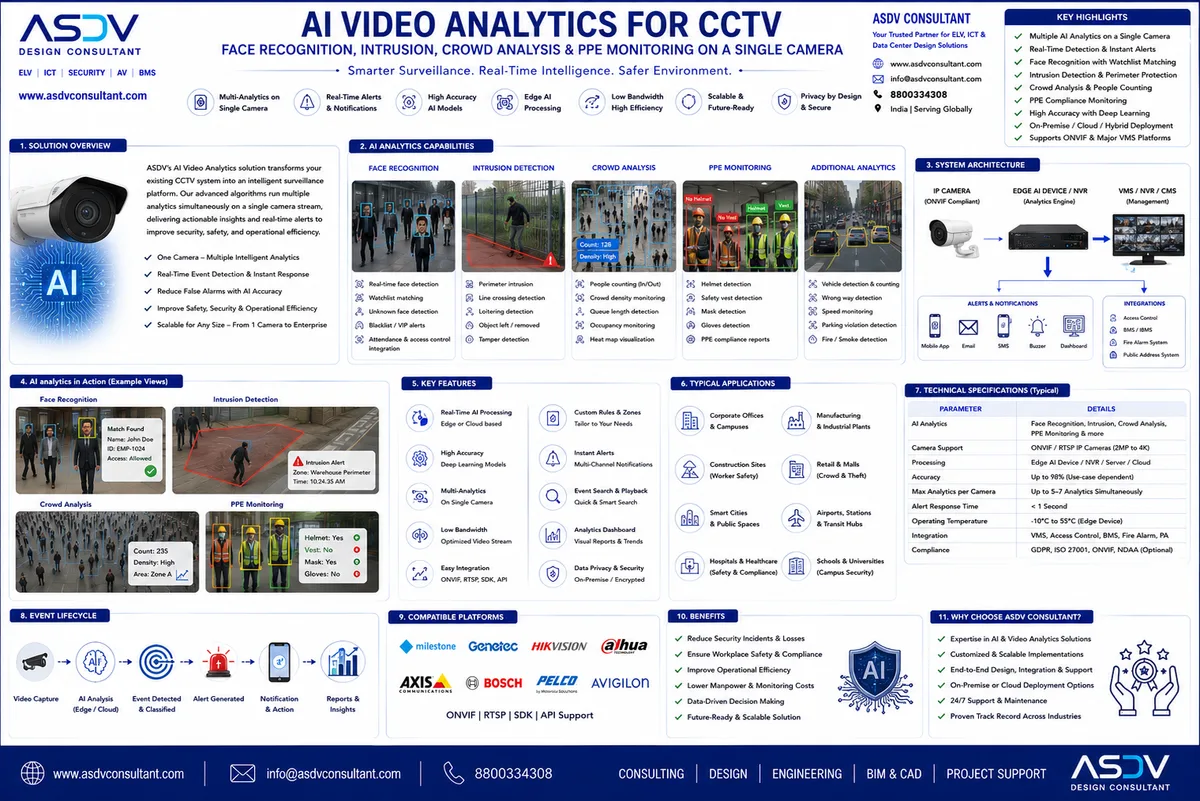
AI video analytics run face recognition, intrusion detection, crowd density analysis, and PPE compliance simultaneously on a single edge camera — no dedicated analytics server required.
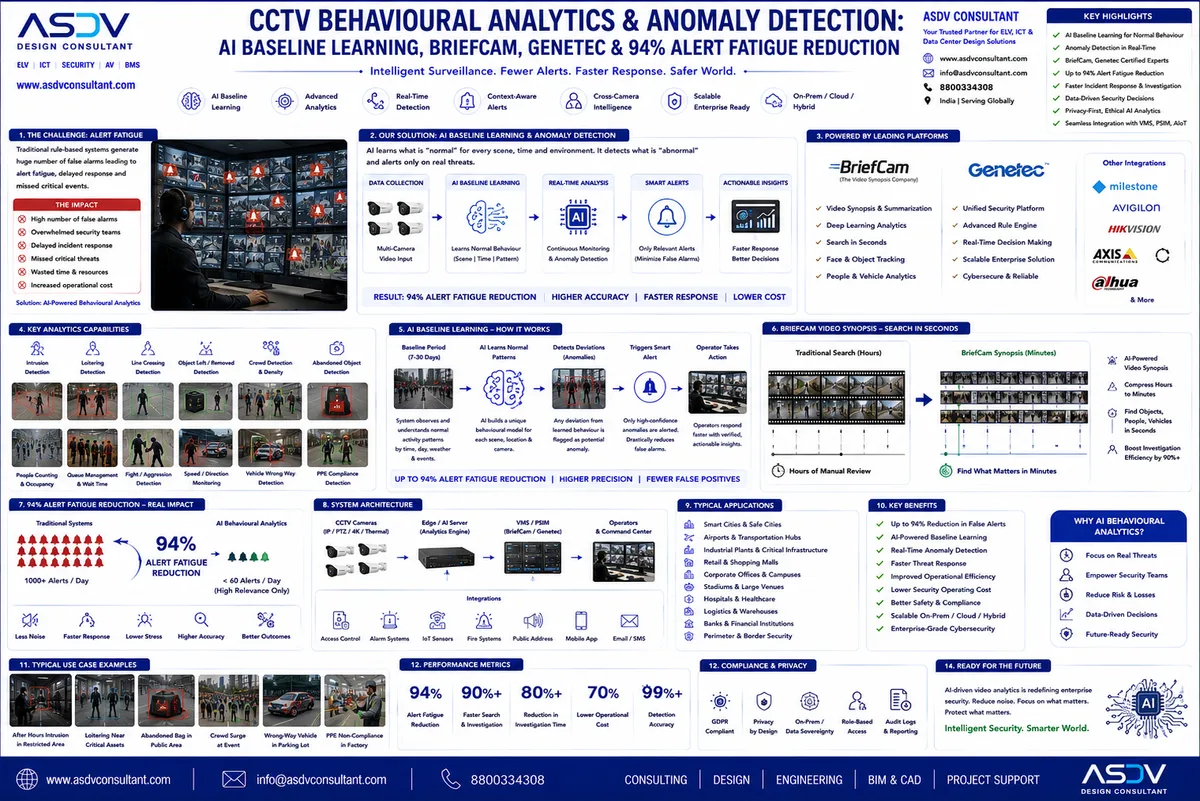
CCTV behavioural analytics platforms like BriefCam and Genetec Security Center learn normal activity patterns over 7–14 days, then detect deviations in real time — reducing security alert fatigue by 94% while detecting genuine threats faster than operator-monitored systems.
Honeywell Forge, Siemens Building X, and JLL Hank deliver BMS analytics entirely from the cloud — enabling portfolio-wide benchmarking, remote AI optimization, and sustainability insights without on-site software infrastructure, at 38% lower 5-year TCO for multi-site Indian portfolios.
AI will continuously verify identity through gait recognition at 97.8% accuracy and ambient biometrics throughout a building stay — revoking access automatically the moment anomalies appear, making the single-event door swipe obsolete by 2030.
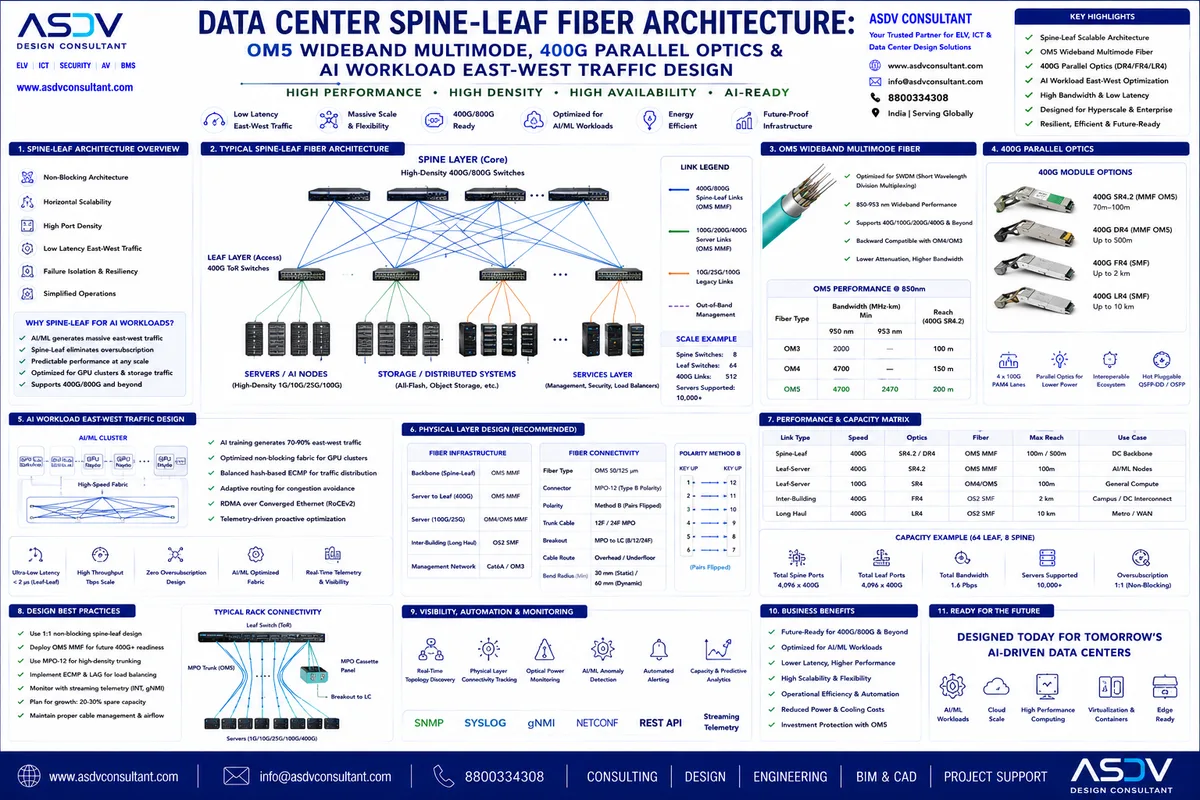
OM5 wideband multimode fiber supports 10×100G wavelengths per fiber pair via SWDM4 — enabling the massive east-west GPU-to-GPU bandwidth that AI training workloads demand across thousands of interconnected compute nodes in spine-leaf data center architectures.
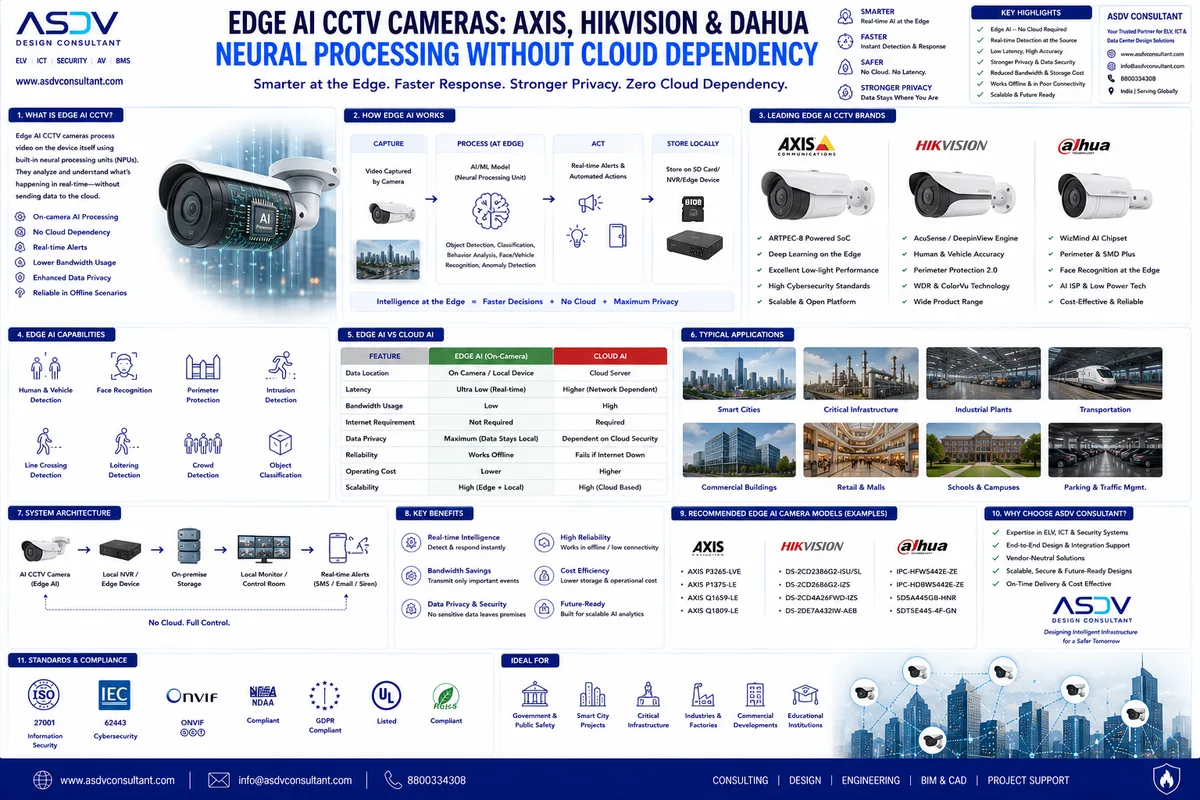
Edge AI CCTV cameras embed neural processing chips running complex analytics locally — reducing bandwidth by 70% vs cloud processing. Axis ARTPEC-8, Hikvision DeepinView, and Dahua WizMind compared.
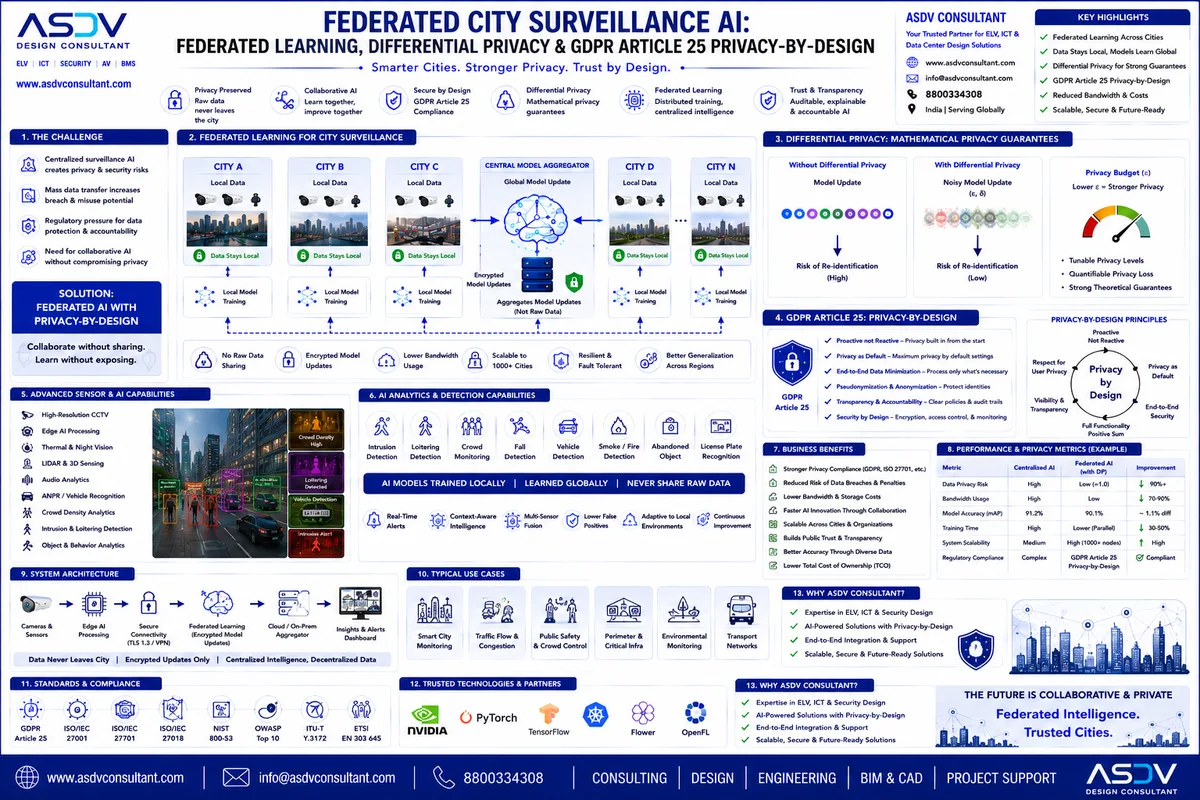
Federated city surveillance AI trains shared threat detection models across multiple camera networks without transferring raw footage — using federated learning and differential privacy to enable city-wide intelligence while meeting GDPR Article 25 privacy-by-design requirements and India DPDP Act compliance.
By 2032, leading commercial buildings will achieve Level 3 autonomy — AI managing 80% of routine decisions without human oversight, with operators reserved exclusively for edge cases and strategic policy exceptions, redefining the facility management role entirely.
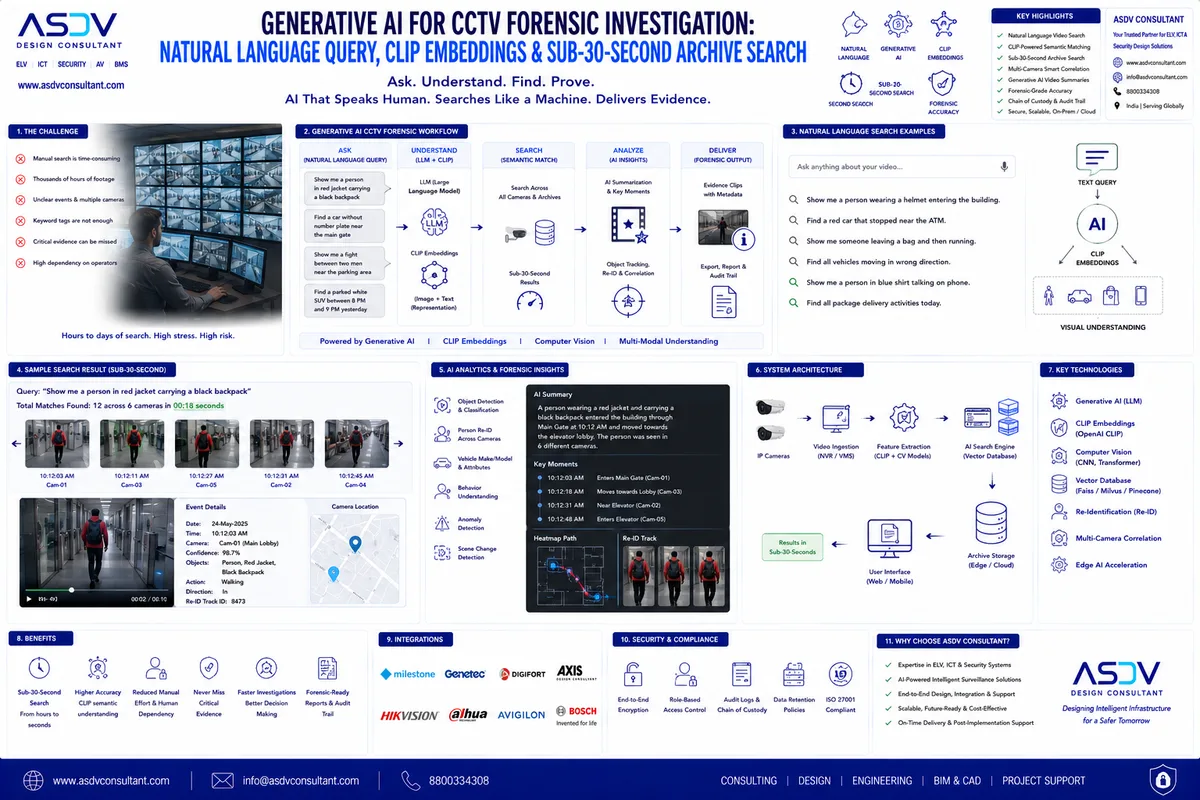
Generative AI transforms CCTV forensic investigation — natural language queries like 'man in red jacket near loading bay yesterday afternoon' search 1000 camera-hours in under 30 seconds using CLIP vision-language embeddings and RAG retrieval, replacing multi-hour manual footage review.
AI managing 500 buildings simultaneously will transfer learned efficiency optimizations between properties — a new building inheriting decades of operational intelligence from its portfolio siblings the moment it connects to the shared platform, compressing years of tuning into days.
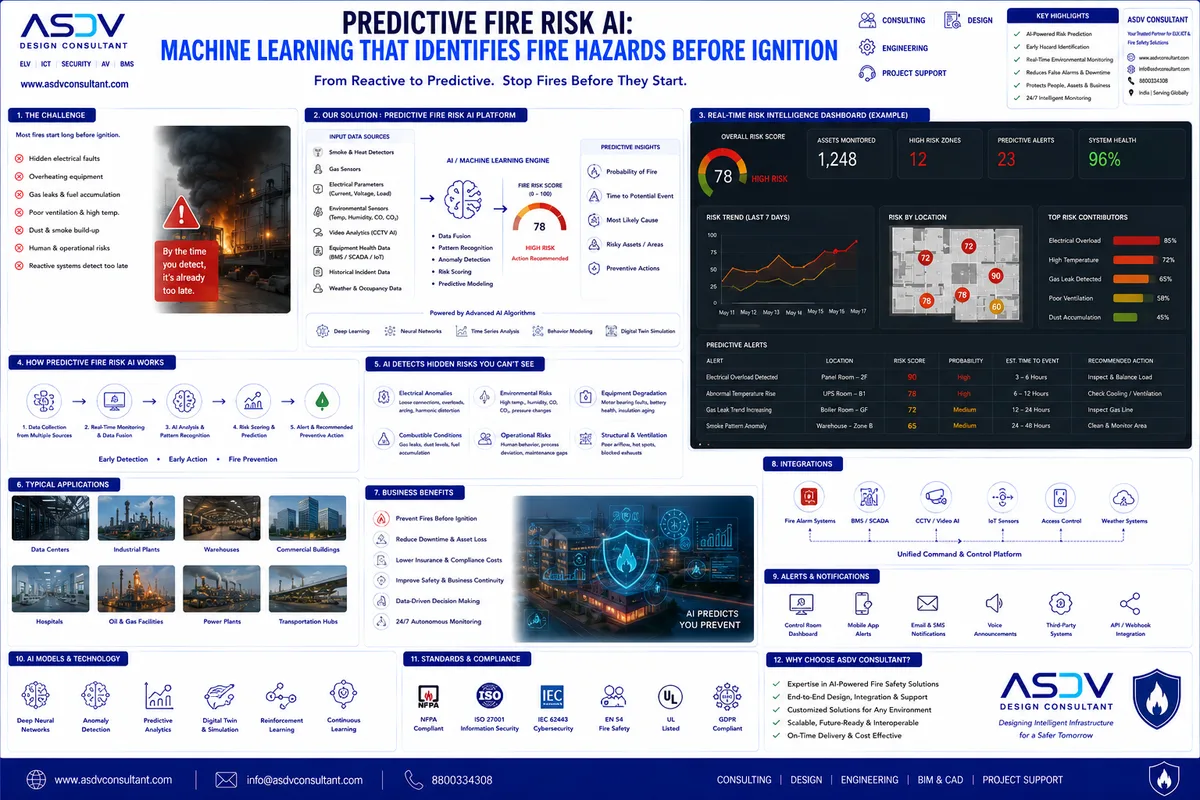
Predictive fire risk AI uses machine learning to score buildings' pre-ignition fire risk from sensor data, maintenance records, occupancy patterns, and environmental factors — identifying fire hazards before ignition occurs and enabling targeted risk reduction interventions.
When a sensor fails, AI will cross-validate against adjacent sensors, impute missing values, reroute control signals through backup paths, and schedule replacement — without paging a facility manager or creating a logged fault condition, eliminating the reactive fault-response model entirely.
ASHRAE Guideline 36-compliant AI sequences identify simultaneous heating and cooling, stuck dampers, and degraded coils — recovering the 8-15% of energy waste that conventional BMS programming consistently misses, with automated fault detection and diagnostics (FDD) for Indian HVAC systems.
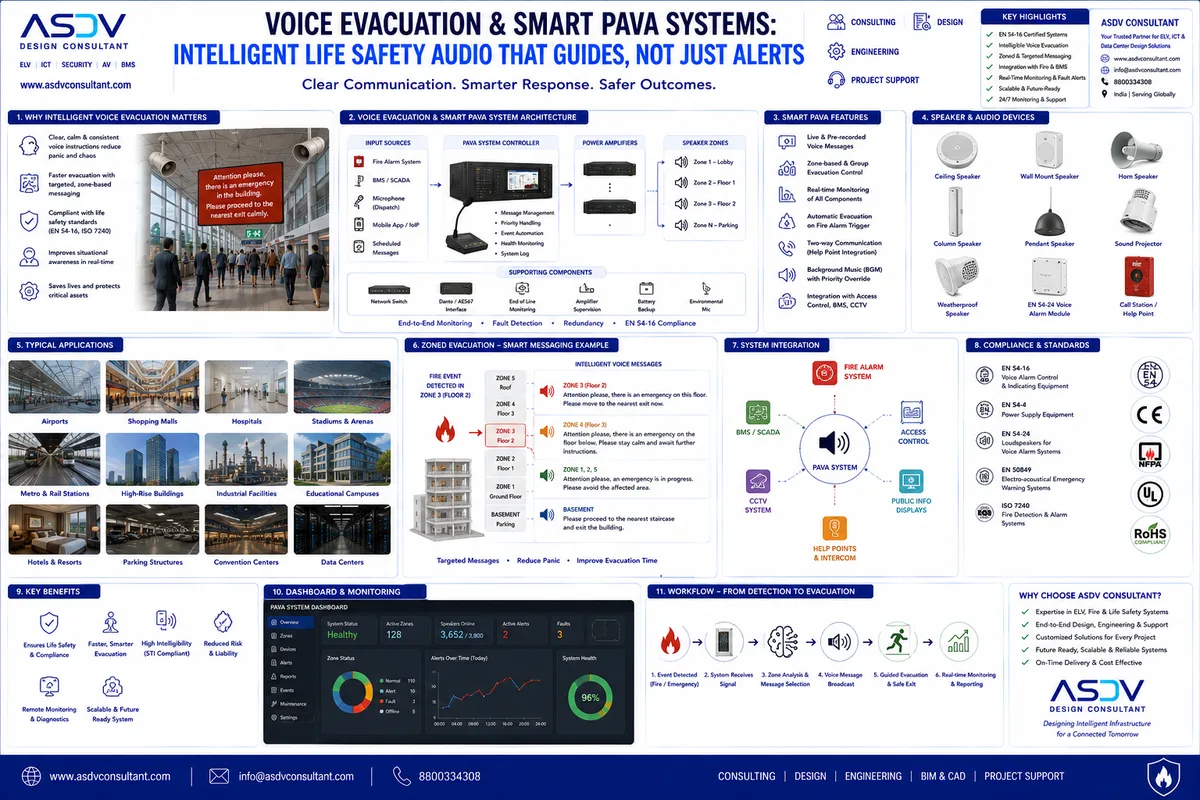
Modern voice evacuation and PAVA systems deliver intelligible, targeted evacuation instructions over traditional sounders — with EN 54-16 compliant amplification, multi-language support, and AI-driven dynamic messaging integrated with fire alarm and BMS systems.
Talk to ASDV Consultant about your project across India, UAE, KSA, Qatar, UK and USA.
Get a Design