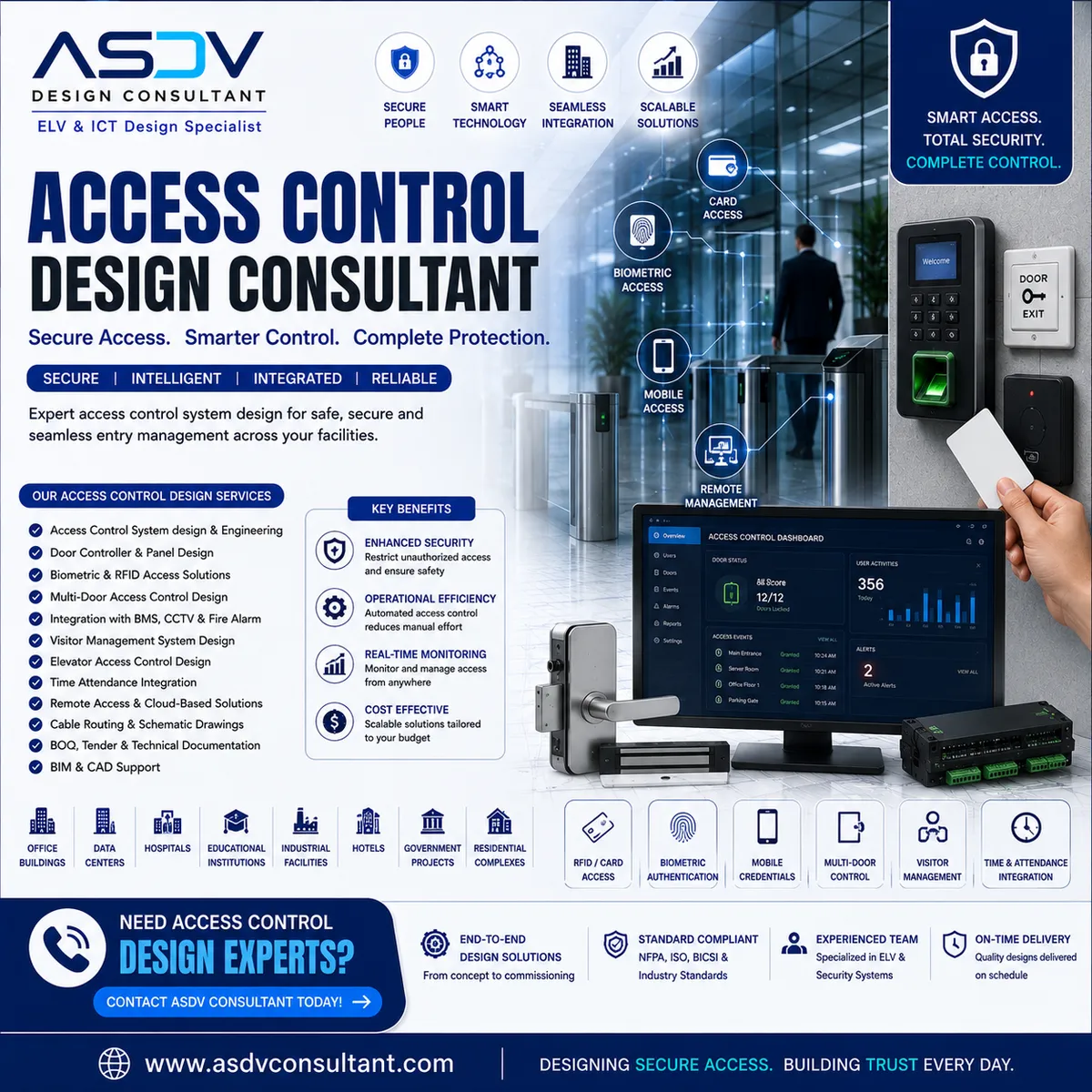
Access Control
ADA Compliance in Access Control Design for US Buildings | ASDV Consultant
Access control hardware in the US must satisfy the ADA's operable-force, reach-range, and clearance rules alongside security requirements.

ASDV's US coverage addresses the decentralized Authority Having Jurisdiction (AHJ) model governing fire alarm approval, UL/NRTL listing requirements, ADA accessibility integration with access control hardware, NEC circuit classification for ELV cabling, and the state-by-state licensing, privacy law, and energy code landscape that shapes every design decision differently depending on jurisdiction.
Access control hardware in the US must satisfy the ADA's operable-force, reach-range, and clearance rules alongside security requirements.
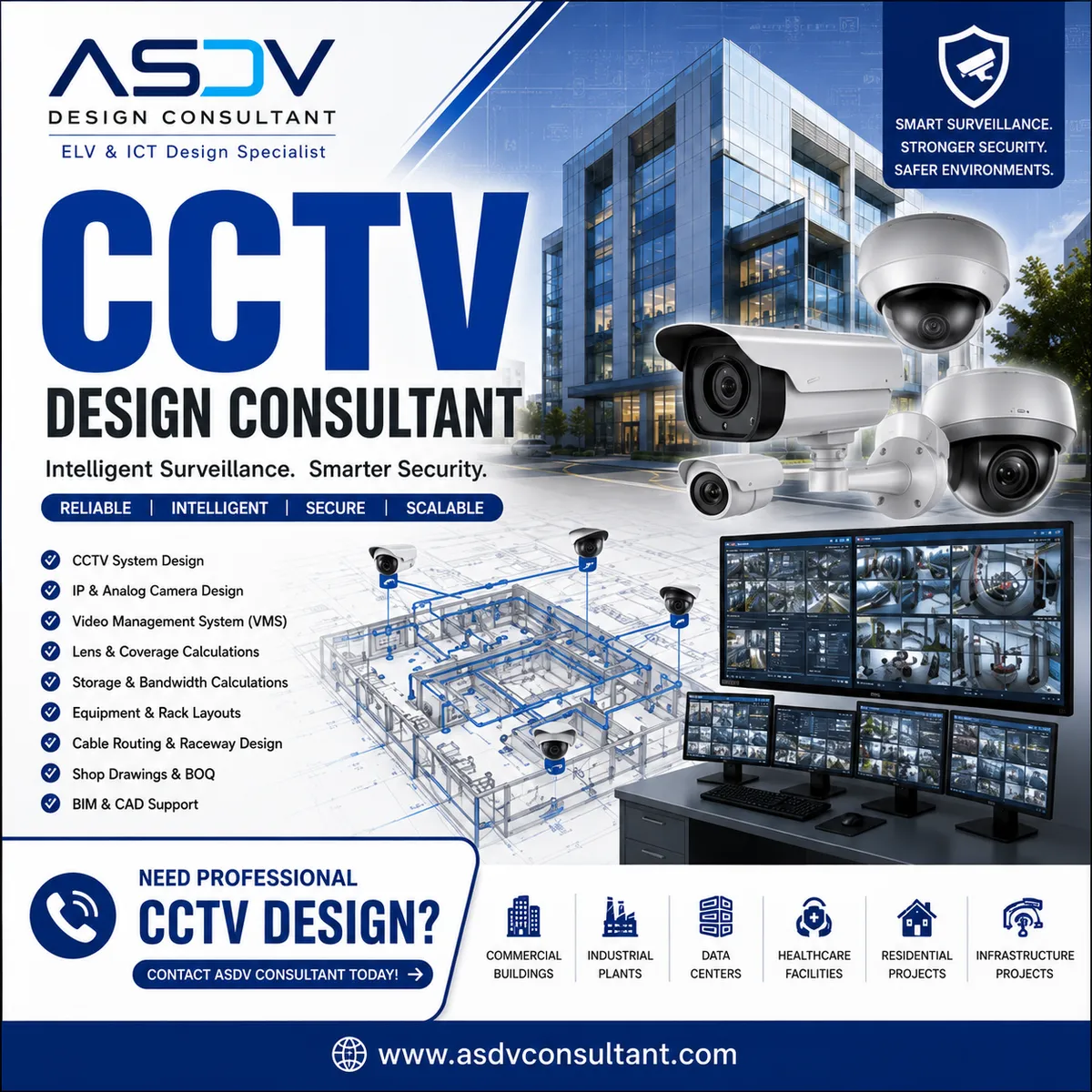
US video surveillance design must account for a patchwork of state privacy laws treating biometric and video data as sensitive information.
Critical infrastructure security design in the US increasingly involves CISA guidance and federal supply-chain rules like NDAA Section 889.
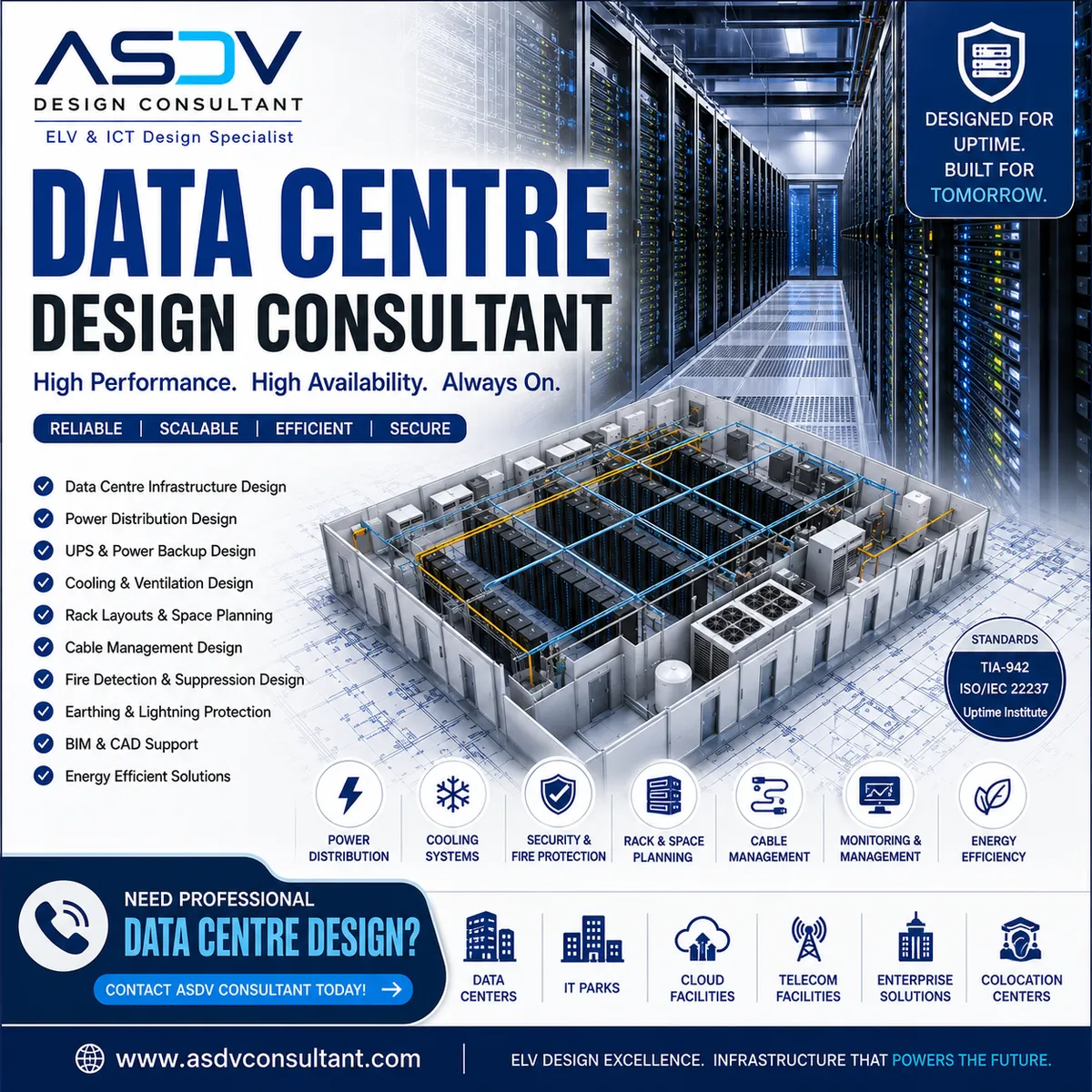
US data centers must satisfy ASHRAE 90.1 (adopted into state energy codes) or the dedicated ASHRAE 90.4 data center energy standard.
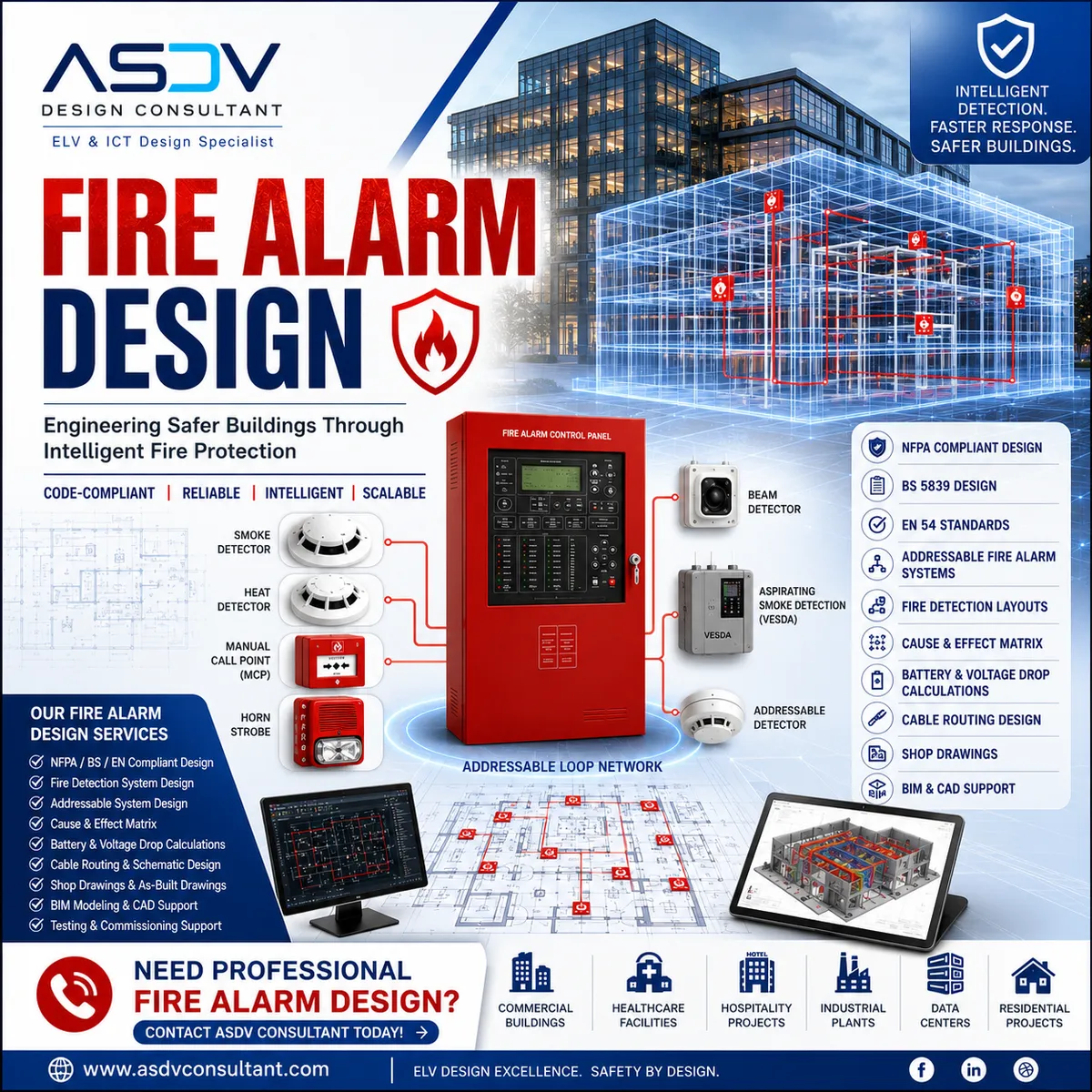
NFPA 72 sets the baseline, but US fire alarm approval runs through the local Authority Having Jurisdiction. Here's why design must start with the AHJ, not just the code.
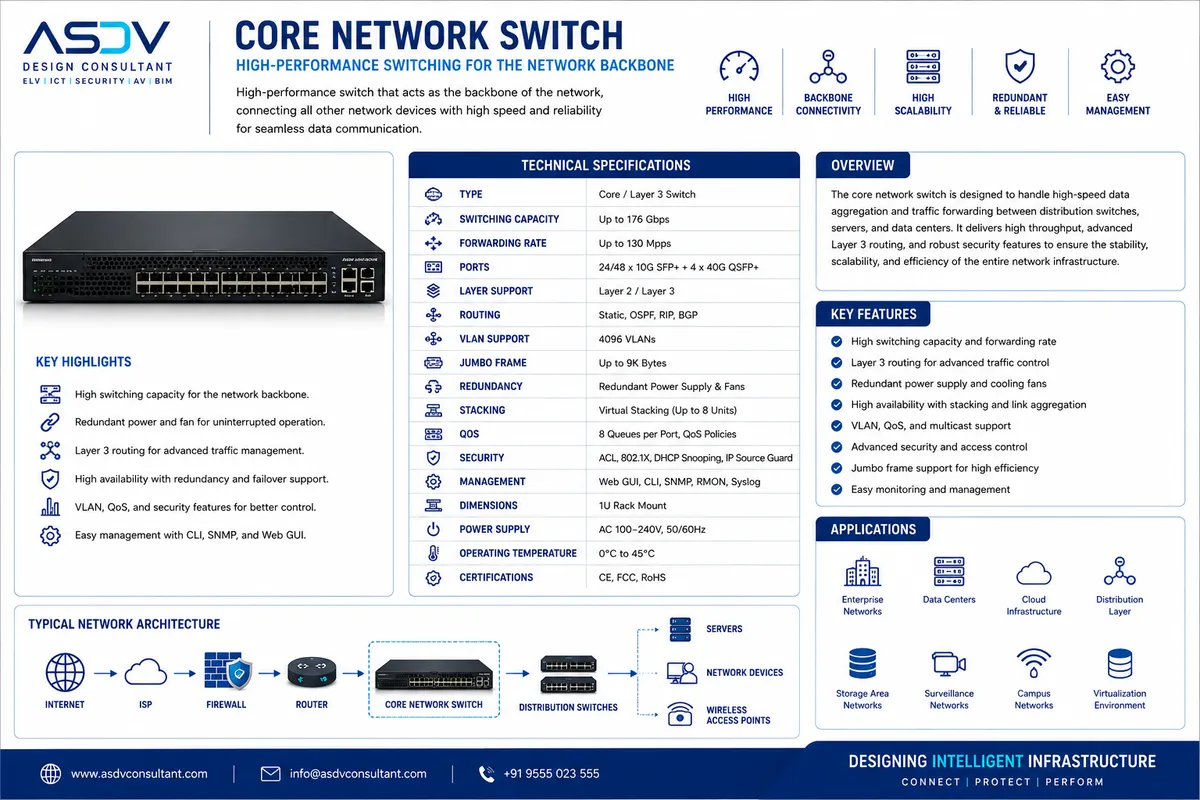
ELV cabling in the US must satisfy NEC Article 725, 760, and 770 circuit classifications — requirements with no direct international equivalent.
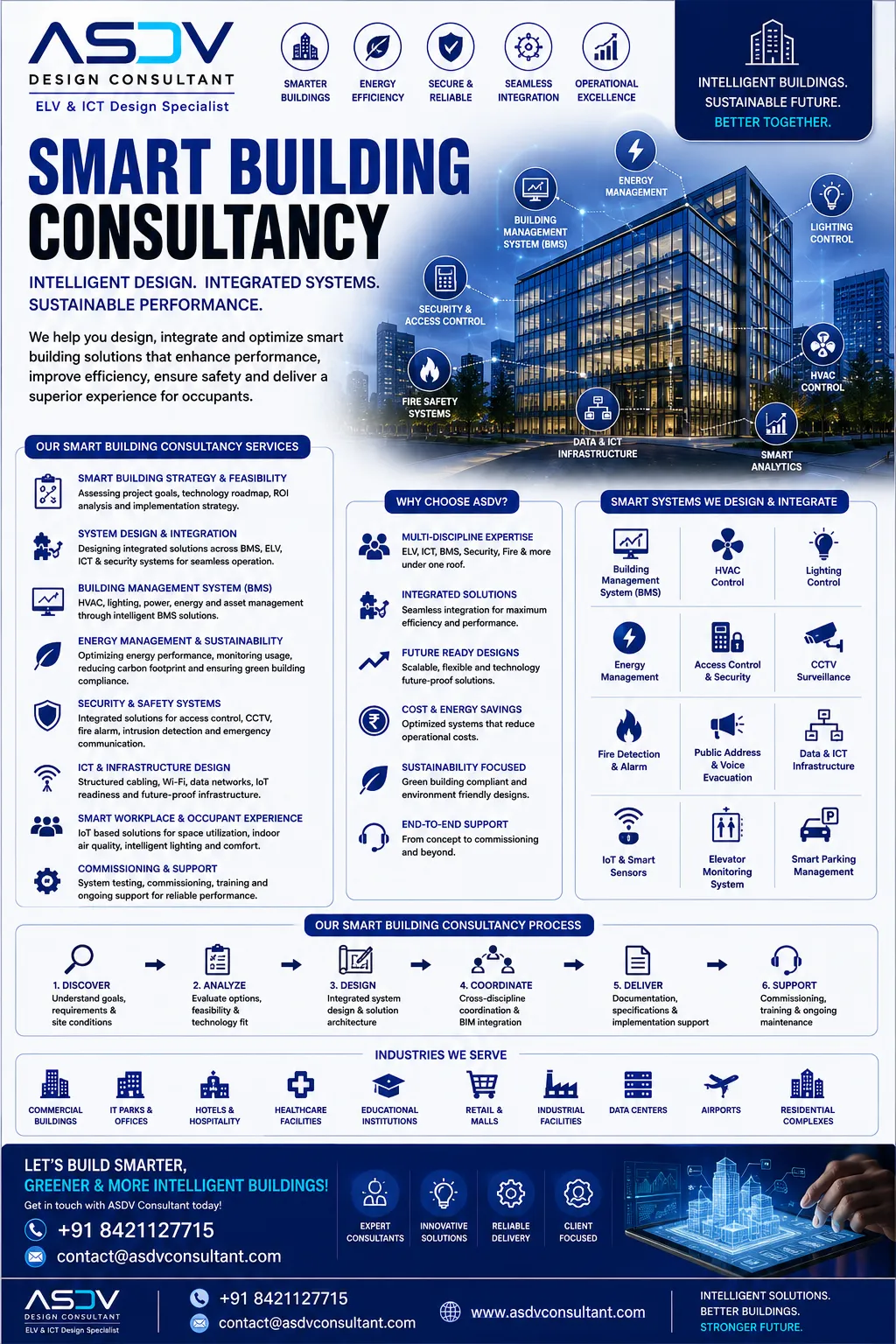
LEED v5 and the WELL Building Standard now expect real-time BMS and sensor data, not just design-stage modeling.
There is no single US license for fire alarm or security system installers — requirements vary by state, and often by county and city.
ANSI/TIA-942-C, updated in 2024, remains the primary US-originated data center infrastructure standard — distinct from the Uptime Institute Tier system.
In the US,
Talk to ASDV Consultant about your project across India, UAE, KSA, Qatar, UK and USA.
Get a Design