
IoT Parking Sensors: Ultrasonic, Magnetic, Camera Design
Ultrasonic, magnetic, and camera-based bay sensors provide individual space occupancy data to the central platform in real time, with detection accuracy exceeding 99.5% across all conditions.
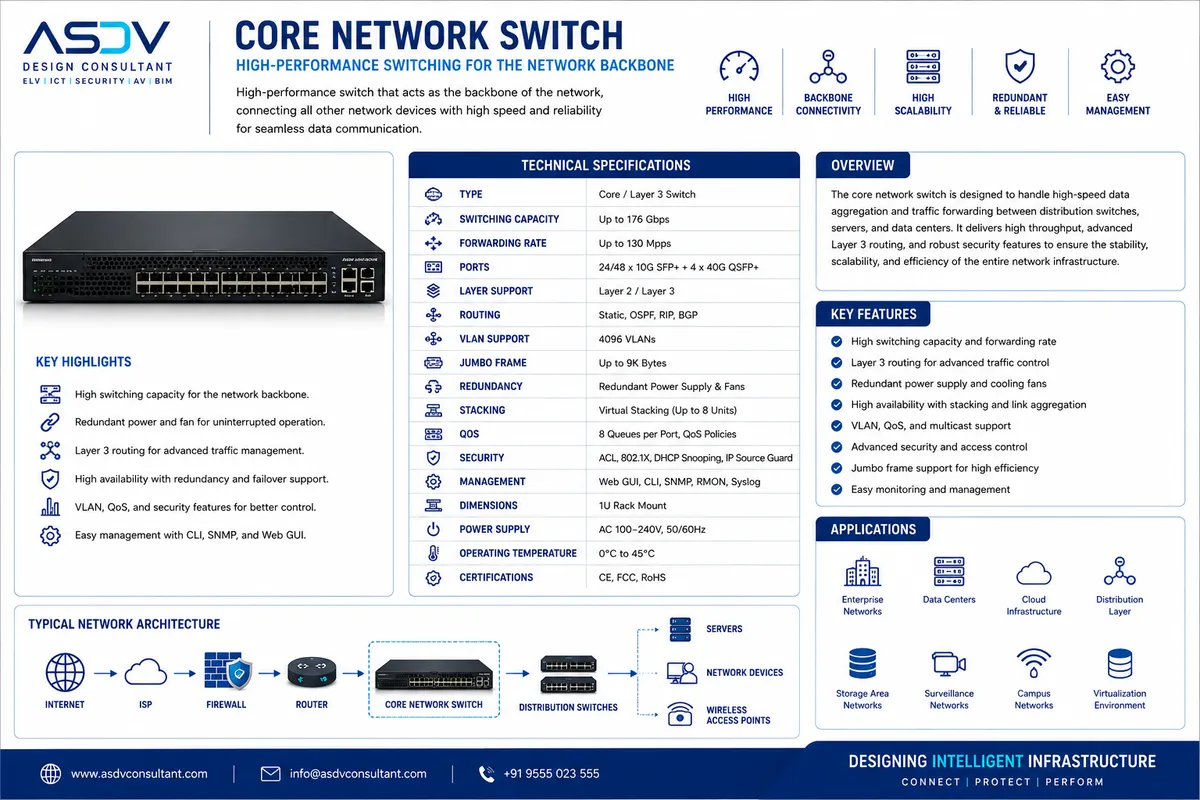
IoT sensor fusion underpins modern smart building, fire safety and data centre monitoring — from single-pair Ethernet powering thousands of IoT endpoints to the sensor networks feeding BMS predictive-maintenance models. This tag collects every article where IoT connectivity or sensor design is the core subject.

Ultrasonic, magnetic, and camera-based bay sensors provide individual space occupancy data to the central platform in real time, with detection accuracy exceeding 99.5% across all conditions.

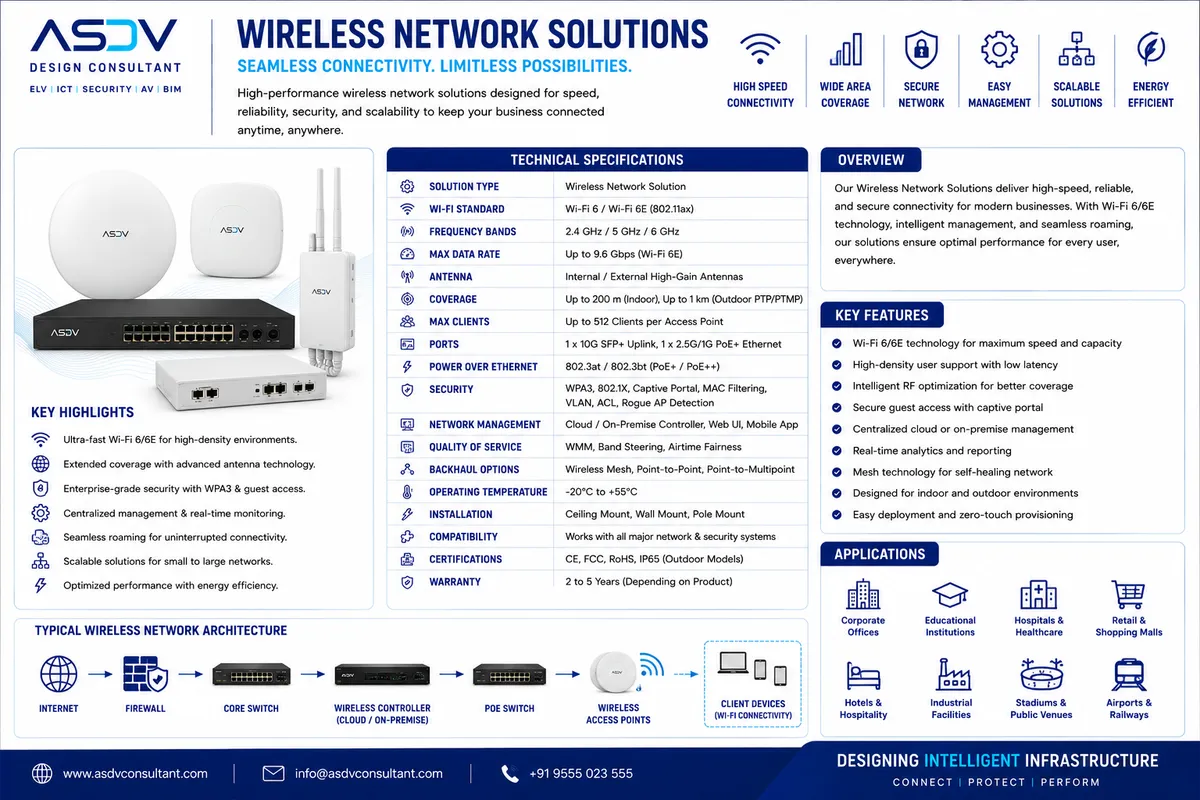
5G and Wi-Fi 7 network slicing creates dedicated virtual segments for different device classes — guaranteeing IoT sensor traffic never competes with a latency-sensitive video call for bandwidth.

Campus-wide private 5G delivers sub-millisecond latency, guaranteed QoS, and SIM-based security to industrial robots, autonomous vehicles, and mission-critical IoT without competing with public cellular.

Wi-Fi 7's 46 Gbps peak throughput, multi-link operation, and 320 MHz channels in the 6 GHz band enable low-latency 8K streaming, holographic collaboration, and high-density IoT deployments.

How AI-driven energy optimization, IoT sensor fusion, digital twins, and cloud-native platforms are transforming Building Management Systems — 30-40% energy savings, predictive maintenance, and the roadmap to fully autonomous buildings by 2032.

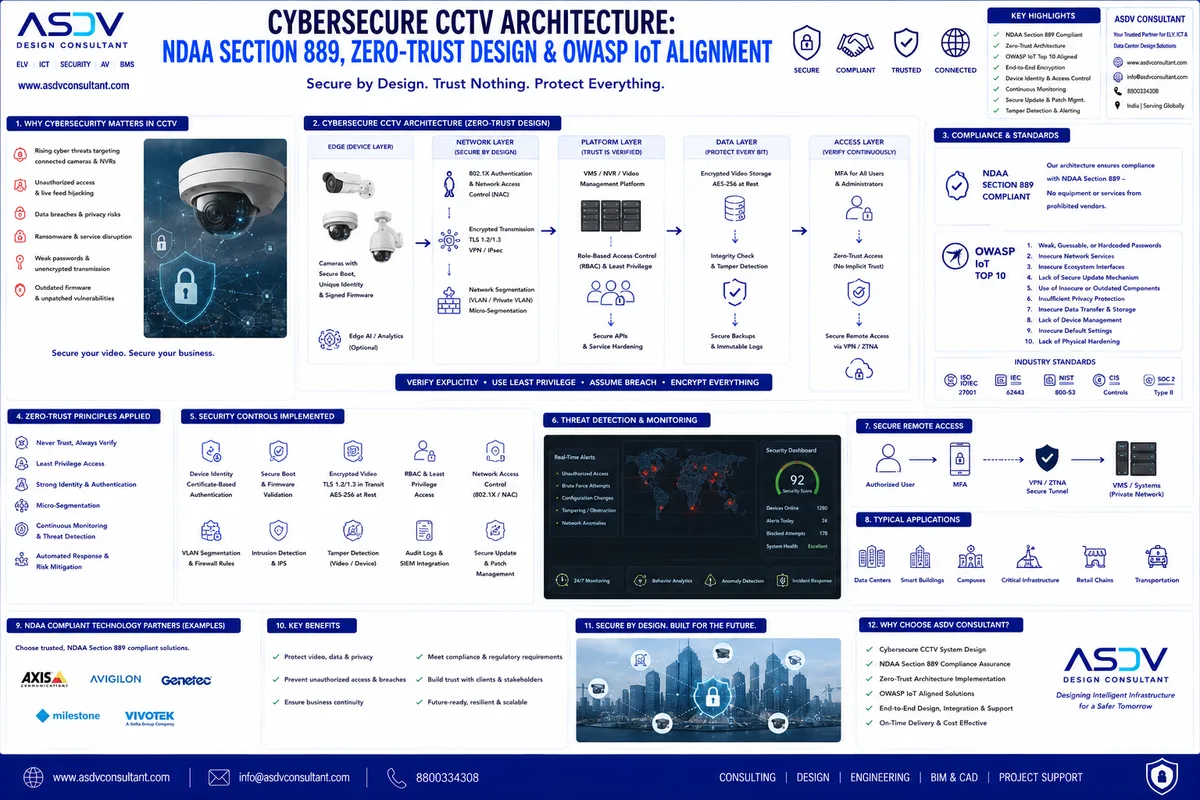
Cybersecure CCTV design requires NDAA Section 889 compliant hardware, VLAN segmentation, TLS 1.3 encrypted streams, role-based VMS access, and OWASP IoT security alignment — protecting surveillance infrastructure from network intrusion and credential attacks.

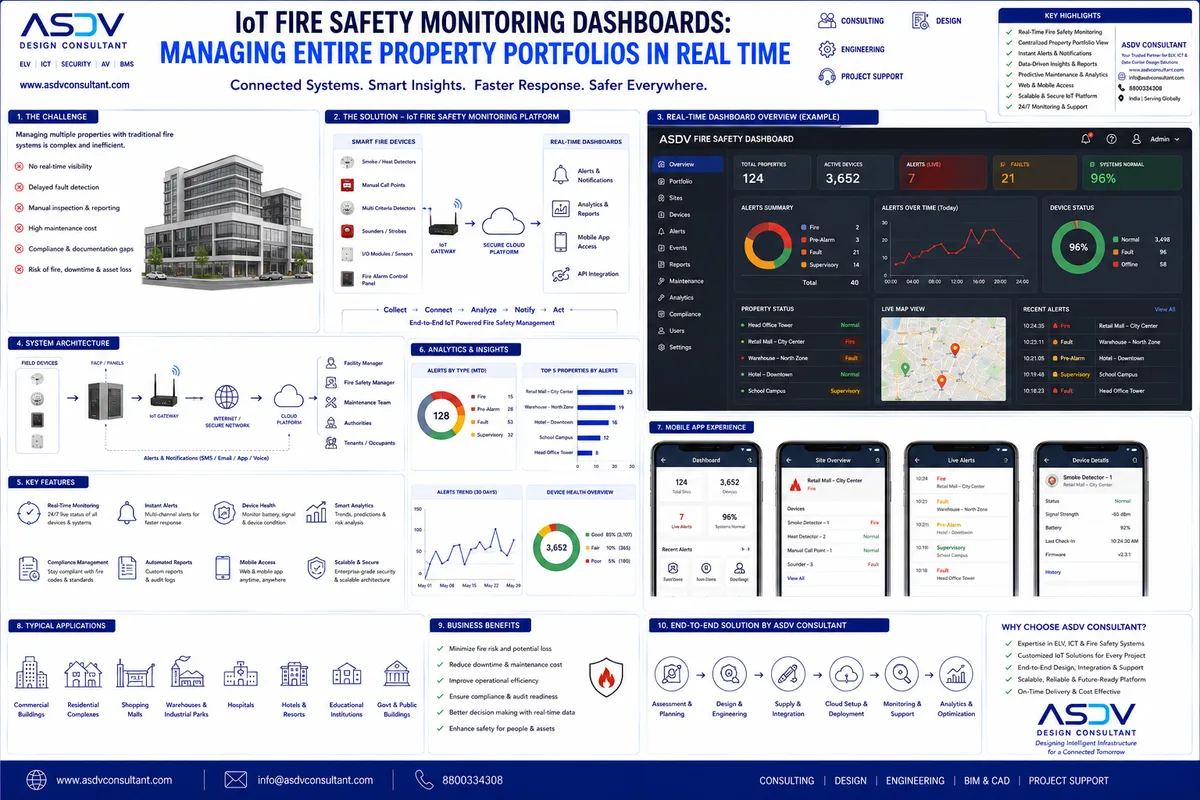
IoT fire safety dashboards give facilities teams a live portfolio view of every building's fire system health — fault alerts, device battery levels, and compliance status from one unified screen.

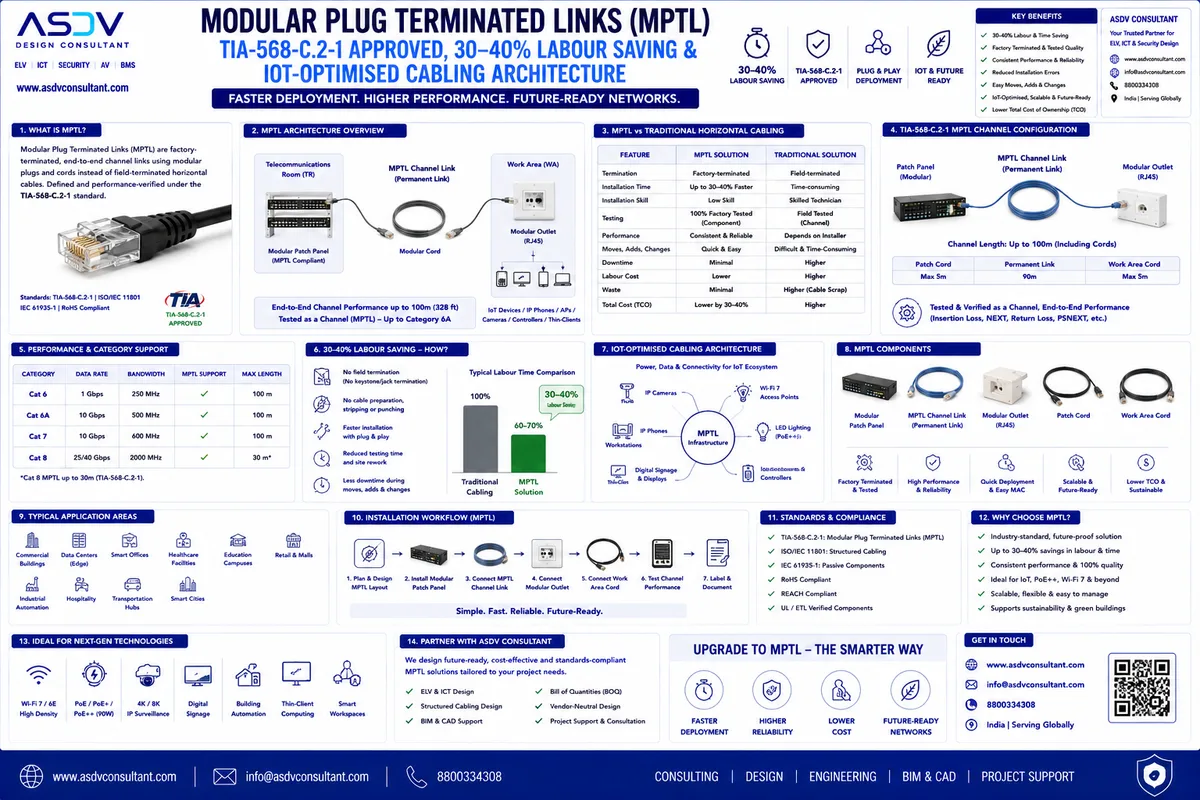
TIA-568-C.2-1 approved MPTL configurations eliminate patch panels at the device end — connecting field-terminated cables directly to IP cameras, access readers, and IoT sensors, reducing installation labour by 30–40% and removing the most common physical layer failure point.

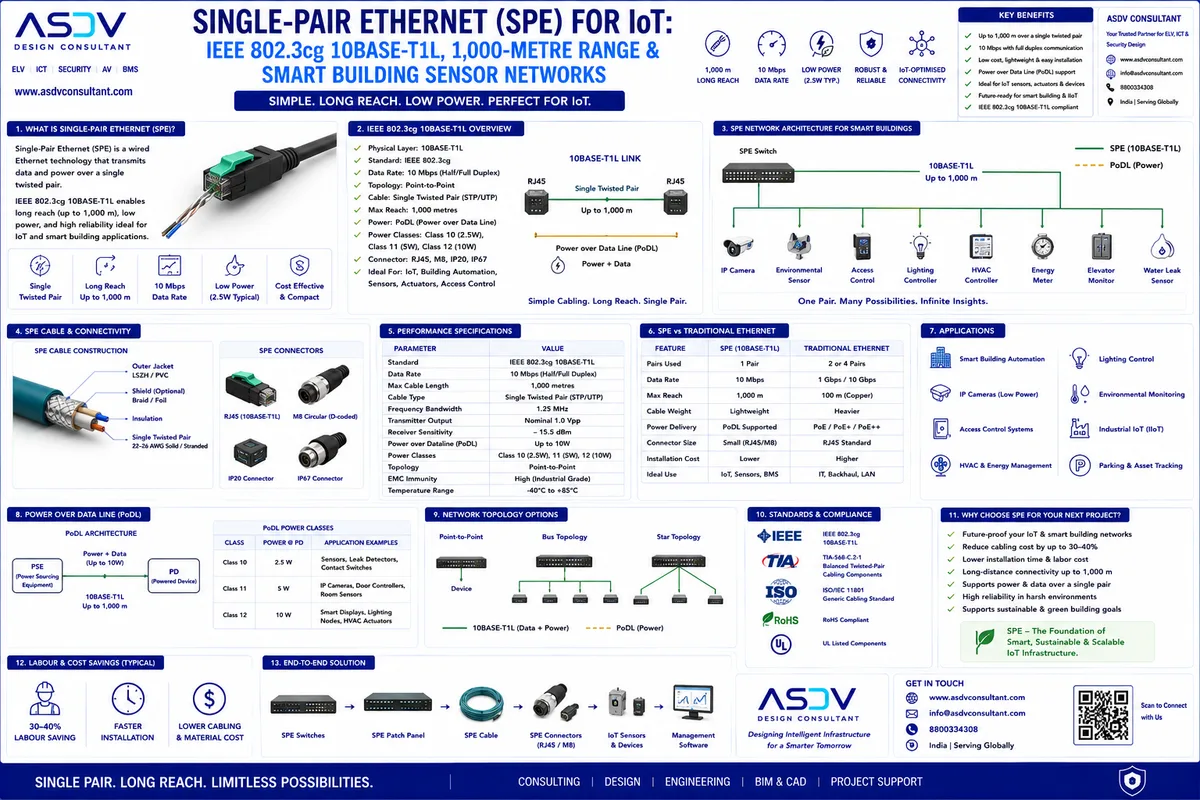
IEEE 802.3cg Single-Pair Ethernet delivers Ethernet and PoE power over a single wire pair to 1,000m — purpose-built for billions of smart building IoT sensors, replacing BACnet MS/TP and Modbus fieldbus with direct IP connectivity at 55–70% lower wiring cost than Cat6A.

Modern BMS platforms ingest data from thousands of IoT sensors — occupancy, air quality, energy, temperature, vibration — creating real-time operational awareness that fixed-schedule rule-based systems cannot approach, with 45% faster fault detection in Indian commercial buildings.
Talk to ASDV Consultant about your project across India, UAE, KSA, Qatar, UK and USA.
Get a Design